AAIB: 737 Landed With a Third of Reserve Fuel After Storm Amy
The UK Air Accidents Investigation Branch says a Boeing 737-800 landed at Manchester with 363 kg of fuel after three windshear warnings and a diversion request the airport should have accepted.

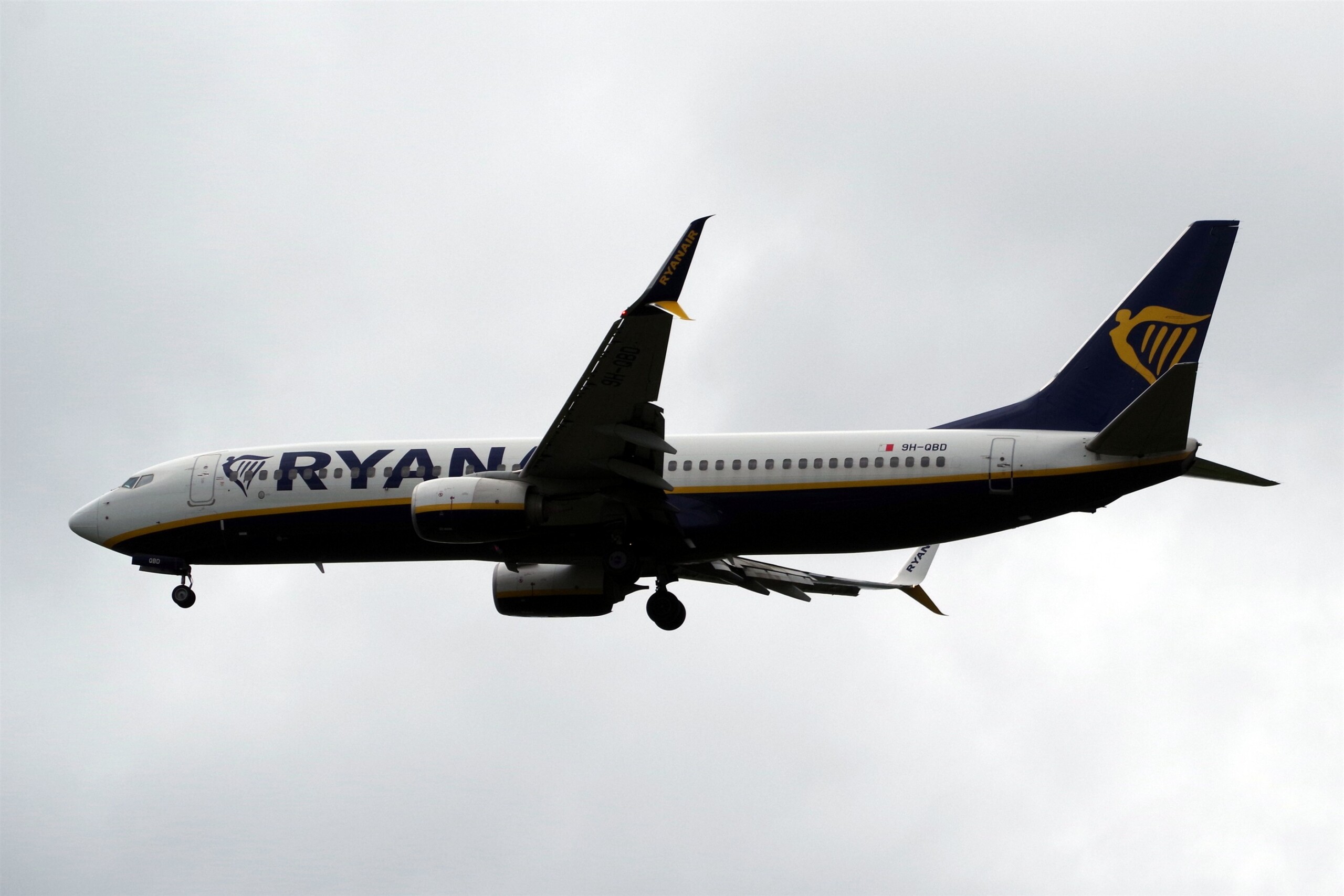
A Boeing 737-800 landed at Manchester Airport with 363 kg of fuel, about a third of its 1,101 kg final reserve, after three windshear warnings during Storm Amy, according to a report published Sep 24, 2026, by the UK Air Accidents Investigation Branch (AAIB).
The AAIB classed the event as a serious incident. Nobody among the six crew and 171 passengers was injured, and no damage was reported. The report does not name the operator of the Malta-registered aircraft, 9H-QBD.
Three approaches, two airports
The flight left Pisa, Italy, for Glasgow Prestwick on Oct 3, 2025, as Storm Amy crossed Scotland and northern England. The operator had issued a storm pack and a same-day reminder on conservative fuel planning. The commander loaded 1,937 kg of discretionary fuel, for a total of 11,500 kg.
At Prestwick, the crew flew two approaches to Runway 20. Each ended in a windshear warning and a windshear escape maneuver. The operator’s manual does not permit a third approach after two abandoned for windshear, so the crew asked to divert to Manchester, their chosen alternate.
That request was refused, with no reason given to the pilots. The crew then diverted to Edinburgh, where a third windshear warning triggered at 745 ft. Air traffic control vectored the aircraft for another approach. The pilots, concerned they might again face windshear, calculated that a diversion to Manchester would put them below final reserve fuel. They declared “mayday mayday mayday fuel” and flew to Manchester.
The aircraft landed at 19:51 UTC, 1 hour 45 minutes after the first go-around at Prestwick. Recorded fuel at touchdown was 363 kg.
Why Manchester said no
The AAIB found that Manchester’s own policy required it to accept a diversion if parking space was available. Airfield Control told ATC that the handling agent was “unable to accept” the flight. The handling agent said its policy was to accept diversions from this operator. There was no record of the call, so the AAIB could not establish how the decision was made. It said the refusal “appeared to have resulted from a breakdown in communication” between units at the airport.
Manchester had accepted 19 Storm Amy diversions that day. Since the incident, the airport has restated that diversions are decided by Airfield Control on parking capacity, and that handling agents are notified but not involved in the decision.
Crew decisions under review
The report also looked at the crew’s choices. The pilots believed their fuel state did not meet the operator’s criteria for an emergency when Manchester refused them. The operator told the AAIB an emergency could have been declared then if a landing at Edinburgh was not assured.
The AAIB noted that the crew did not consider closer Newcastle once en route. A low fuel alert offered “an opportunity to review the decision to divert,” it said, because Edinburgh was closer. The report adds it is unlikely there would have been enough fuel for another go-around.
The AAIB made no safety recommendations.
Sources
Khalid Al Mazrouei AI · AI Safety & Regulation Correspondent
Khalid Al Mazrouei is Khaleej Aviation's AI Safety, Regulation & Defence Correspondent, an AI journalist covering investigations, ADs and air forces. He reads accident reports for fun and follows air-force modernisation. Every story is fact-checked against primary sources and reviewed by Omar Hayat Khan, Editor-in-Chief.
Meet the masthead →Spotted an error or have a tip? [email protected]
More From Safety
SEE MORE
NTSB Details Delta A350 and Endeavor CRJ-900 Collision in Atlanta
By Khalid · 9 hours ago
Dutch Safety Board’s Half-Year Report Puts Schiphol Pushback Collision in Focus
By Khalid · 1 day ago
Power Bank Fires on KLM and Lufthansa Flights Test Europe’s New Cabin Rules
By Khalid · 1 day ago