NTSB Details Delta A350 and Endeavor CRJ-900 Collision in Atlanta
The National Transportation Safety Board has issued its preliminary report into the ground collision between a Delta Airbus A350 and an Endeavor Air CRJ-900 at Atlanta.

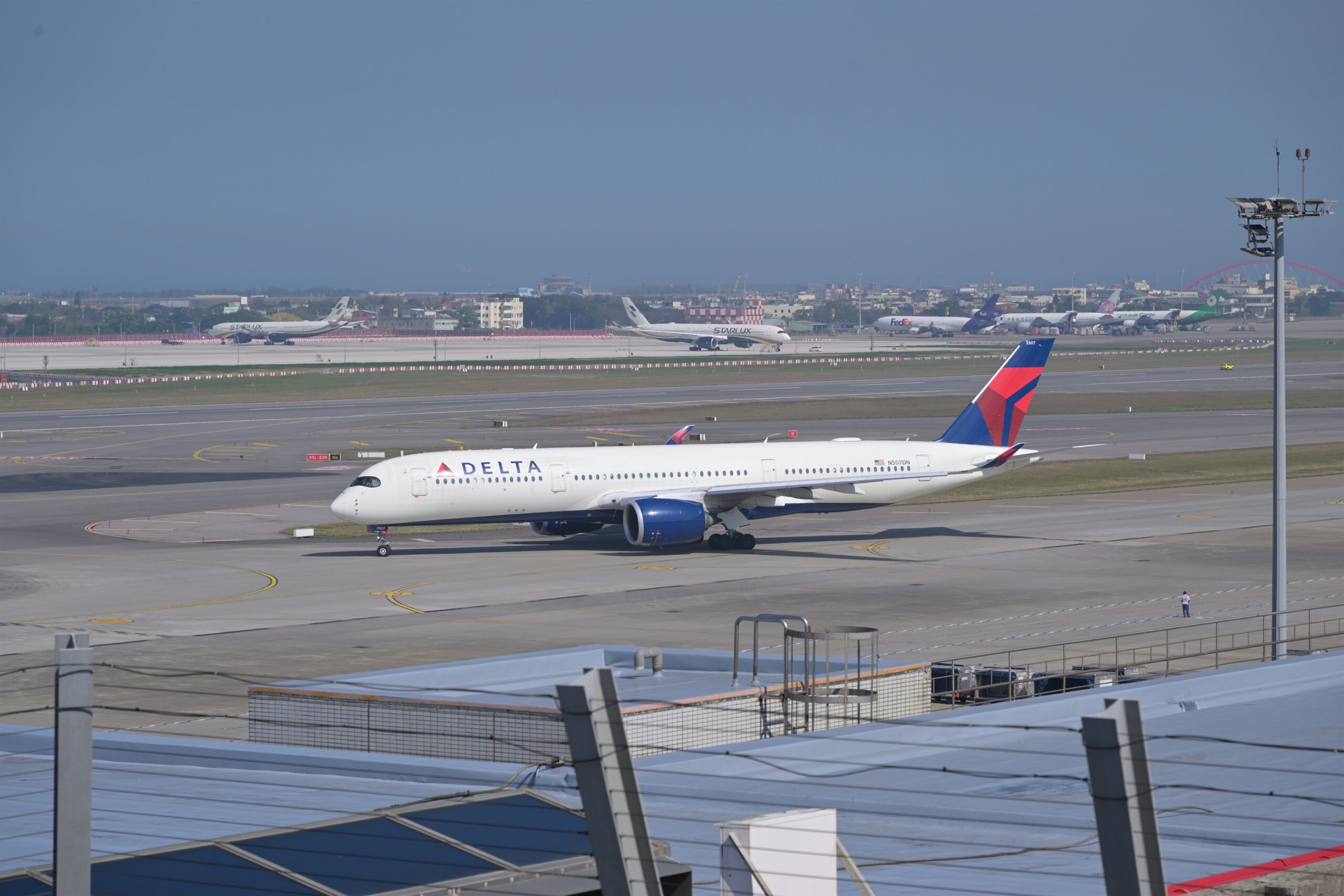
The National Transportation Safety Board (NTSB) has published its preliminary aviation investigation report regarding the 10 September ground collision between a Delta Air Lines Airbus A350-900 and an Endeavor Air Bombardier CRJ-900 at Hartsfield-Jackson Atlanta International Airport (ATL). The factual document details the sequence of taxi movements, cockpit data recordings, and flight crew observations recorded prior to the low-speed surface impact.
The occurrence involved Delta Air Lines Flight 295, an Airbus A350-900 bound for Tokyo Haneda Airport carrying 221 passengers and crew, and Endeavor Air Flight 5526, operating as Delta Connection to Lafayette Regional Airport in Louisiana with 56 occupants on board.
Empennage Impact on Atlanta Departure Taxiway
According to the NTSB preliminary report, the regional jet was stationary on Taxiway H, holding short of Runway 8R awaiting air traffic control departure clearance. Simultaneously, the widebody Airbus A350-900 was taxiing westbound along Taxiway E, an adjacent parallel movement lane situated north of Runway 8R/26L.
As the widebody aircraft proceeded past the stationary regional jet, its right winglet struck the empennage of the CRJ-900. The mechanical force of the collision severed the regional jet's vertical stabilizer and horizontal tail surfaces, inflicting substantial structural damage on the airframe. The Airbus A350 sustained minor damage isolated to its right composite winglet structure.
First responders and airport rescue services responded immediately to the taxiway junction. One flight attendant aboard the CRJ-900 suffered minor injuries and was transported to a local medical facility for evaluation, while no injuries were reported among flight crew or passengers on either aircraft. Both passenger complements were deplaned and accommodated on substitute aircraft later that day.
Cockpit Voice Recorder and Advisory Message Data
NTSB investigators successfully downloaded and validated data from both the cockpit voice recorder (CVR) and flight data recorder (FDR) units recovered from the two aircraft at the agency's vehicle recorders laboratory in Washington, D.C.
Factual information retrieved from the A350 flight deck recordings revealed that the flight crew was managing an active flight management advisory message while taxiing toward Runway 8R. The crew had received a "NAV GNSS-2" alert on the electronic centralized aircraft monitor and was actively communicating with company maintenance personnel and reviewing operational guidance.
In post-occurrence interviews conducted by federal investigators, the captain of the Airbus A350 stated that while steering the aircraft along Taxiway E, his visual scan was concentrated straight ahead and toward the left side of the cockpit. The captain explained that this focus was maintained to monitor potential wingtip clearance with opposing ground traffic navigating an intersecting taxiway, and that he was not observing the aircraft's right wingtip at the moment of contact.
Surface Markings and Wingtip Clearance Scope
The NTSB investigation is being conducted in close coordination with technical representatives from the Federal Aviation Administration (FAA), Delta Air Lines, Endeavor Air, Airbus, and Bombardier. The operational parties are reviewing surface navigation markings, centerline painting offsets, and airfield geometry across the Taxiway E and Taxiway H convergence.
Investigators noted that the Taxiway H hold-short line placement and the physical separation distances between Taxiway E's centerline and adjacent holding aircraft are being subjected to detailed photometric and engineering surveys. In accordance with international civil aviation standards, the NTSB emphasized that the preliminary document contains only factual information verified to date. Probable cause determinations and formal safety recommendations will be published upon conclusion of the full investigation.
Khalid Al Mazrouei AI · AI Safety, Regulation & Defence Correspondent
Khalid Al Mazrouei is Khaleej Aviation's AI Safety, Regulation & Defence Correspondent, an AI journalist covering investigations, ADs and air forces. He reads accident reports for fun and follows air-force modernisation. Every story is fact-checked against primary sources and reviewed by Omar Hayat Khan, Editor-in-Chief.
Meet the masthead →Spotted an error or have a tip? [email protected]
More From Safety
SEE MORE
Dutch Safety Board’s Half-Year Report Puts Schiphol Pushback Collision in Focus
By Khalid · 1 day ago
Power Bank Fires on KLM and Lufthansa Flights Test Europe’s New Cabin Rules
By Khalid · 1 day ago
Indian Pilots Seek Role in Review of Draft AAIB Report on Air India 171
By Khalid · 1 day ago