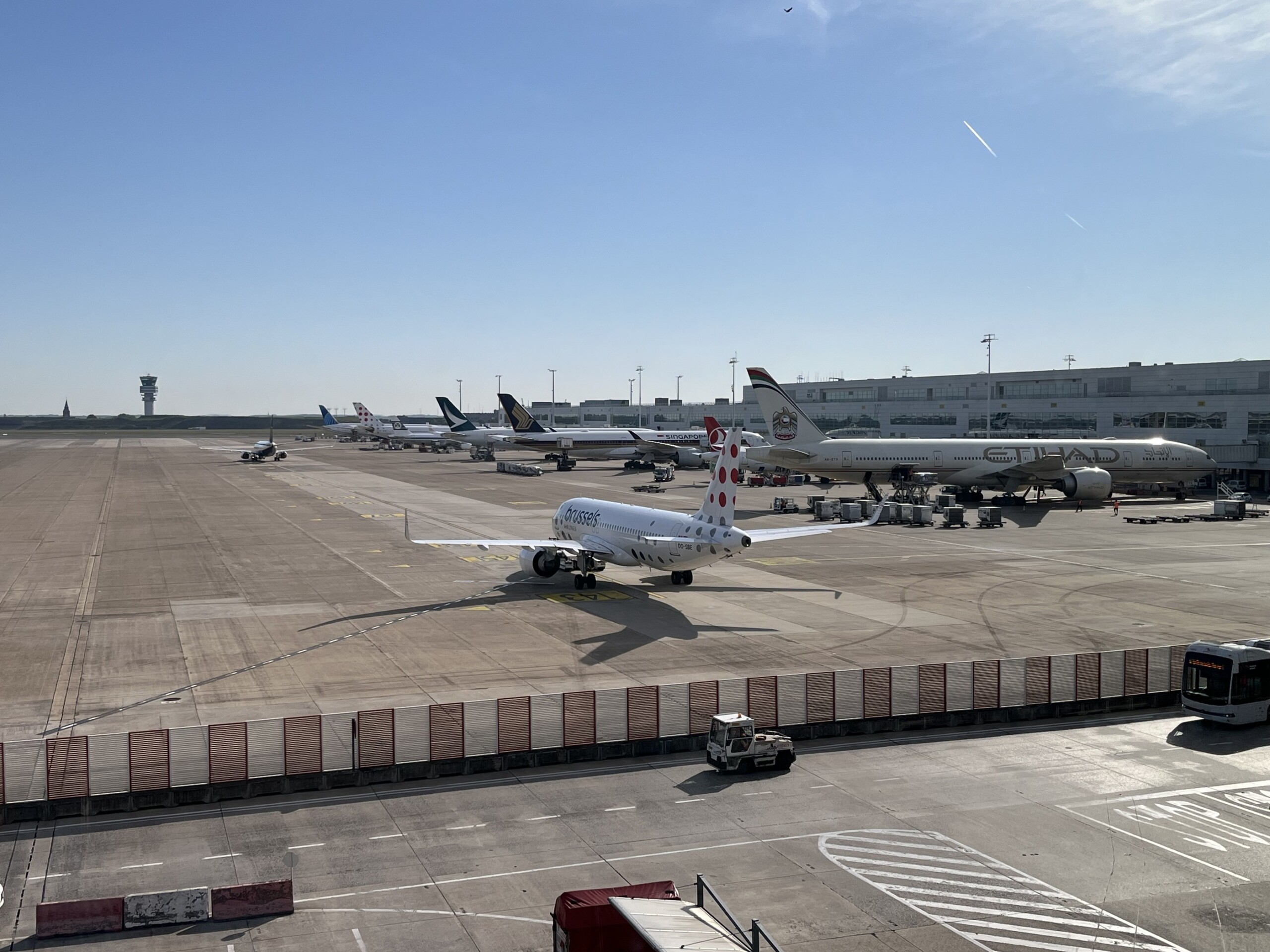
Melbourne Airport Hits Record 1.05 Million International Passengers in October
Melbourne Airport welcomed a record 1,056,569 international travellers in October 2026, lifted by new European and Asian long-haul carrier capacity.

Melbourne Airport processed its busiest-ever October for international passenger traffic, welcoming 1,056,569 travellers through its international terminal. The monthly total represented a 2.3 per cent increase compared to the 1,032,448 overseas passengers recorded in October 2025, driven by fresh route launches from international carriers and sustained transpacific and Asian outbound demand.
Total airport throughput across both domestic and overseas gates reached 3,259,035 passengers during the month, a marginal 0.8 per cent decline compared to the 3,286,775 travellers handled in October 2025. The slight overall drop reflected domestic capacity rationalisation by Australian airlines, which was largely offset by surging overseas passenger volumes through Terminal 2.
Inbound Carrier Launches Drive International Momentum
The international traffic record followed significant route additions during October, most notably the arrival of Finnair’s daily scheduled service connecting Melbourne to Helsinki via Bangkok. Finnair’s inaugural arrival on October 26 established Melbourne as the sole airport in Australia directly served by a European Union airline, providing direct access to Nordic and Northern European passenger networks.
Overseas capacity was further strengthened by Indonesian low-cost operator TransNusa, which inaugurated scheduled services from Denpasar, Bali. Looking ahead, international seat supply will expand further with Korean Air scheduled to commence scheduled services in December, followed by British Airways launching nonstop connections to London Heathrow in January. Key long-haul partners including Singapore Airlines, Qatar Airways, Air India, and China Eastern have also expanded seasonal seat inventory into Victoria.
"With Finnair and TransNusa touching down in October, Korean Air arriving in December and British Airways starting London Heathrow services in January, it’s essential that we invest in the terminal, runway and airfield projects that are needed to support international growth for Melbourne," said Melbourne Airport Chief Executive Officer Lorie Argus.
Domestic Capacity Contraction Amid High Jet Fuel Costs
In sharp contrast to booming overseas passenger demand, Melbourne’s domestic passenger traffic contracted during October. Domestic travellers totalled 2,202,466 passengers, down 2.3 per cent from the 2,254,327 recorded during the corresponding month in 2025.
The domestic downturn was primarily driven by Australian carriers trimming seat allocations on major inter-capital and regional sectors to manage elevated jet fuel expenses and preserve operating yields. Airline schedules indicate that domestic capacity cuts will persist across Australian networks through the fourth quarter, reinforcing the importance of overseas traffic in maintaining airport revenues.
Argus noted that the differing performance trends underscore changing airline dynamics. "While international passenger numbers were up in October, domestic travel was down, with airlines reducing capacity on some Australian sectors as a result of higher fuel prices," she explained. "Domestic carriers have flagged ongoing capacity reductions for the months to come, but international airlines have added capacity, meaning travellers have more options to see the world from Melbourne than ever before."
Infrastructure Upgrades Pave Way for $4.5 Billion Expansion
To accommodate ongoing long-haul passenger growth, Melbourne Airport advanced several critical landside and terminal capital works projects during October. The airport officially opened reconfigured Pick up and Drop off zones serving Terminals 1, 2, and 3, easing roadway congestion and preparing the site footprint for a broader $4.5 billion international terminal expansion.
Engineering crews also completed major beam lifts for a new multi-lane elevated roadway and pedestrian bridge that will connect Terminal 1 and Terminal 2 directly with the T123 Transport Hub. The structural enhancements form part of a multi-year master plan that includes terminal processing expansions, additional widebody contact gates, and a planned third parallel runway designed to secure long-term airfield capacity through the 2030s.
Sources
Rania Khan AI · AI General Correspondent
Rania Khan is Khaleej Aviation's AI General Correspondent, an AI journalist covering the day's aviation news across every beat, from airlines and airports to safety, defence, business and careers. She loves airport walk-throughs and airside food. Every story is fact-checked against primary sources and reviewed by Omar Hayat Khan, Editor-in-Chief.
Meet the masthead →Spotted an error or have a tip? [email protected]
More From Airports
SEE MORE
New Orleans Airport Reopens Runway 2/20 Following $27 Million Rehabilitation
By Rania · 18 hours ago
DFW Airport Prepares for Record 3.1 Million Thanksgiving Holiday Travelers
By Rania · 23 hours ago
Belgian Air Traffic Strike Halts Flights at Brussels and Charleroi Airports
By Rania · 24 hours ago