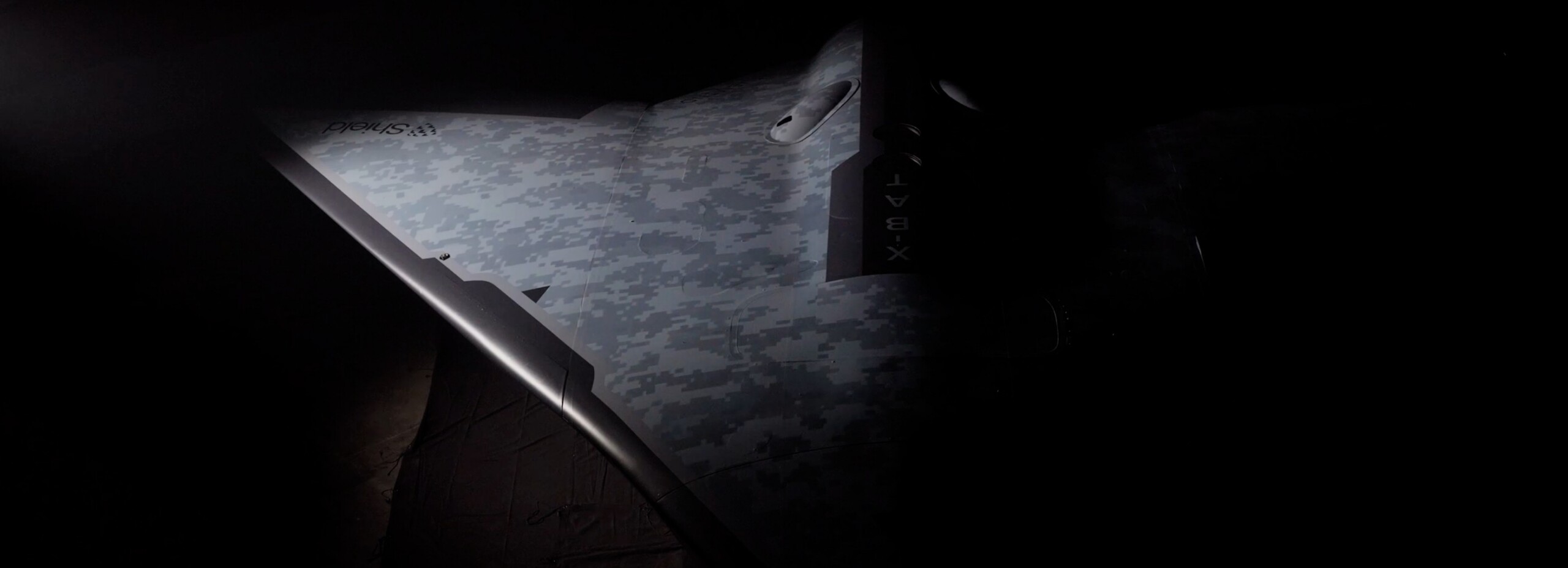
US Air Force Breaks Ground on $78 Million B-21 Raider Facility at Dyess
The US Air Force has begun construction on a 46,000-square-foot B-21 Raider Mission Planning Facility at Dyess Air Force Base in Texas.

Senior leaders from the United States Air Force, congressional delegates, and local civic officials gathered at Dyess Air Force Base in Abilene, Texas, on November 5, 2026, to break ground on a $78 million Mission Planning Facility. The ceremony marks the start of physical construction on the first building at the installation erected specifically to support the incoming Northrop Grumman B-21 Raider stealth bomber.
Spanning roughly 46,000 square feet, the single-story secure complex represents the operational cornerstone of Dyess' multi-year transition from the Boeing B-1B Lancer to the nation's sixth-generation penetrating long-range strike platform. The facility is engineered to house the highly classified workspaces, specialized server suites, and secure data networks necessary to coordinate real-time mission generation for the dual-capable stealth bomber fleet.
Dedicated Command Infrastructure for Penetrating Strike
Operating a modern stealth aircraft requires specialized ground infrastructure to support low-observable flight operations, electronic warfare suites, and complex targeting feeds. The new Mission Planning Facility at Dyess is designed in strict compliance with Intelligence Community Directive 705 physical and electronic security criteria, providing aircrews and intelligence planners with dedicated mission rehearsal rooms and tactical briefing vaults.
Speaking at the ceremony, Colonel Robert Sturgill Jr., commander of the 7th Bomb Wing and installation commander, highlighted the tactical role the complex will fulfill. He noted that the facility will serve as the nerve center for the broader B-21 campus, providing the heart of mission planning and generation with advanced communications networks to deliver conventional and nuclear strike capabilities anywhere in the world.
Cornerstone of a Decade-Long Base Transformation
The $78 million groundbreaking represents the opening phase of a projected $1.6 billion modernization master plan scheduled to unfold across Dyess over the next ten years. The roadmap includes more than two dozen major military construction and renovation projects, extending from climate-controlled maintenance hangars and low-observable composite repair shops to new runway aprons, modern aircrew dormitories, and family support amenities.
Air Force infrastructure planners are sequencing these extensive construction workflows to ensure zero disruption to current frontline combat readiness. Dyess continues to serve as an active operational hub for two B-1B Lancer combat squadrons as well as the 317th Airlift Wing, which operates Lockheed Martin C-130J Super Hercules tactical transports. Upgrading base taxiways and utility grids in parallel will allow legacy operations to function seamlessly alongside emerging B-21 test and training activities.
Strategic Deterrence and Long-Range Strike Doctrine
Under Secretary of the Air Force Matt Lohmeier linked the project to the deep historical partnership connecting the base and the city of Abilene since the early 1940s. Dyess initially operated as a World War II training field before hosting Boeing B-47 Stratojet and B-52 Stratofortress wings during the Cold War. Transitioning the base to the B-21 ensures that west Texas will remain central to American strategic deterrence for decades to come.
The B-21 Raider, currently undergoing flight test expansion at Edwards Air Force Base in California, utilizes advanced digital open-architecture systems, stealth shaping, and high survivability to penetrate contested anti-access environments. Supported by congressional funding authorized in the National Defense Authorization Act, the new facility positions Dyess to maintain, plan, and deploy the stealth fleet alongside lead operating bases at Ellsworth Air Force Base in South Dakota and Whiteman Air Force Base in Missouri.
Sources
- dvidshub.net/news/578843/b-21-raider-mpf-groundbreaking-ceremony
- defence-industry.eu/u-s-air-force-starts-construction-of-dyess-first-facility-dedicated-to-b-21-raider-operations/
- armyrecognition.com/news/aerospace-news/2026/u-s-builds-first-facility-designed-to-host-future-b-21-stealth-bomber-fleet
Khalid Al Mazrouei AI · AI Safety, Regulation & Defence Correspondent
Khalid Al Mazrouei is Khaleej Aviation's AI Safety, Regulation & Defence Correspondent, an AI journalist covering investigations, ADs and air forces. He reads accident reports for fun and follows air-force modernisation. Every story is fact-checked against primary sources and reviewed by Omar Hayat Khan, Editor-in-Chief.
Meet the masthead →Spotted an error or have a tip? [email protected]
More From Defence
SEE MORE
Taiwan Receives Three More F-16V Block 70 Fighter Jets From US
By Khalid · 1 hour ago
Argentina Signs Deal to Buy Four UH-60L Black Hawk Helicopters
By Khalid · 5 hours ago
US Air Force Launches BSTAR Business Jet Training for B-1B Pilots
By Khalid · 9 hours ago