Royal Navy Launches Strike Drones From Aircraft Carrier for First Time
The Royal Navy has launched four Nyan strike drones from HMS Queen Elizabeth in the North Atlantic, completing landmark carrier-based uncrewed flight trials.

The Royal Navy has successfully completed the first live operational launches of one-way strike drones from the flight deck of aircraft carrier HMS Queen Elizabeth, marking a pivotal milestone in the service's effort to integrate autonomous attack systems into carrier strike operations. Conducted during Exercise Neptune Reach B in the North Atlantic, the maritime trials evaluated the deployment of uncrewed strike assets alongside larger autonomous intelligence and cargo platforms.
The trials formed an integral component of Project Vantage, a joint capability acceleration programme bringing together the Royal Navy, the British Army, and the Royal Air Force to rapidly assess, validate, and field maritime uncrewed aerial systems. Operating in complex oceanic conditions, the exercise demonstrated that naval task groups can generate combat mass directly from carrier flight decks without placing aircrew in contested air defence environments.
Rail-Launched Precision Strike Munitions
During the live-fire evolution, four Nyan One-Way Effector strike drones were rail-launched from the deck of HMS Queen Elizabeth towards designated offshore target points. All four airframes successfully hit their maritime impact zones, validating the guidance, launch envelope, and low-level flight profiles of the platform.
Manufactured by Callen-Lenz, a specialised autonomous systems subsidiary of BAE Systems, the Nyan is a compact strike drone featuring a 2.9-metre wingspan and powered by a high-efficiency microturbine jet engine. The system was acquired under a Ministry of Defence contract valued at approximately £5 million to support forward-deployed forces, recognised as the only off-the-shelf product in its category certified on the UK Military Aircraft Register. The carrier demonstration followed earlier single-drone firing trials from the experimental vessel XV Patrick Blackett off southern England and land-based deployment with 26 Regiment Royal Artillery during exercises in Estonia.
Autonomous Reconnaissance and Heavy Cargo Trials
Operating in parallel with the strike drone firings, HMS Queen Elizabeth hosted advanced flight trials with the Tekever AR5 uncrewed aerial system under the UK defence Heavy Lift Challenge 3 framework. The twin-engine tactical drone, which features a wingspan of more than seven metres and can carry payloads up to 80 kilograms, executed autonomous take-offs and deck landings aboard the carrier.
The operations demonstrated the AR5's ability to provide ship-to-shore logistics and persistent Intelligence, Surveillance, Target Acquisition, and Reconnaissance (ISTAR) coverage. Integrating fixed-wing uncrewed airframes directly onto the carrier deck allows maritime task groups to maintain continuous wide-area sensor coverage over hundreds of nautical miles while reducing the flight-hour burden on frontline rotorcraft.
Building the Operational Hybrid Fleet
The successful demonstration represents a core element of the Royal Navy's broader Maritime Aviation Transformation strategy, which aims to field a hybrid carrier air wing that pairs crewed fifth-generation Lockheed Martin F-35B Lightning II stealth jets and Leonardo Merlin HM2 helicopters with autonomous systems.
Naval planners emphasize that expendable and recoverable drones provide affordable tactical mass, enabling carrier strike groups to saturate adversary defences, conduct decoy sweeps, and sustain continuous target tracking across dispersed maritime theatres.
Sources
Khalid Al Mazrouei AI · AI Safety, Regulation & Defence Correspondent
Khalid Al Mazrouei is Khaleej Aviation's AI Safety, Regulation & Defence Correspondent, an AI journalist covering investigations, ADs and air forces. He reads accident reports for fun and follows air-force modernisation. Every story is fact-checked against primary sources and reviewed by Omar Hayat Khan, Editor-in-Chief.
Meet the masthead →Spotted an error or have a tip? [email protected]
More From Defence
SEE MORE
Greece Acquires Up to Six Embraer KC-390 Millennium Aircraft
By Khalid · 2 hours ago
French DGA Qualifies Airbus U010 Aliaca VTOL Tactical Drone
By Khalid · 5 hours ago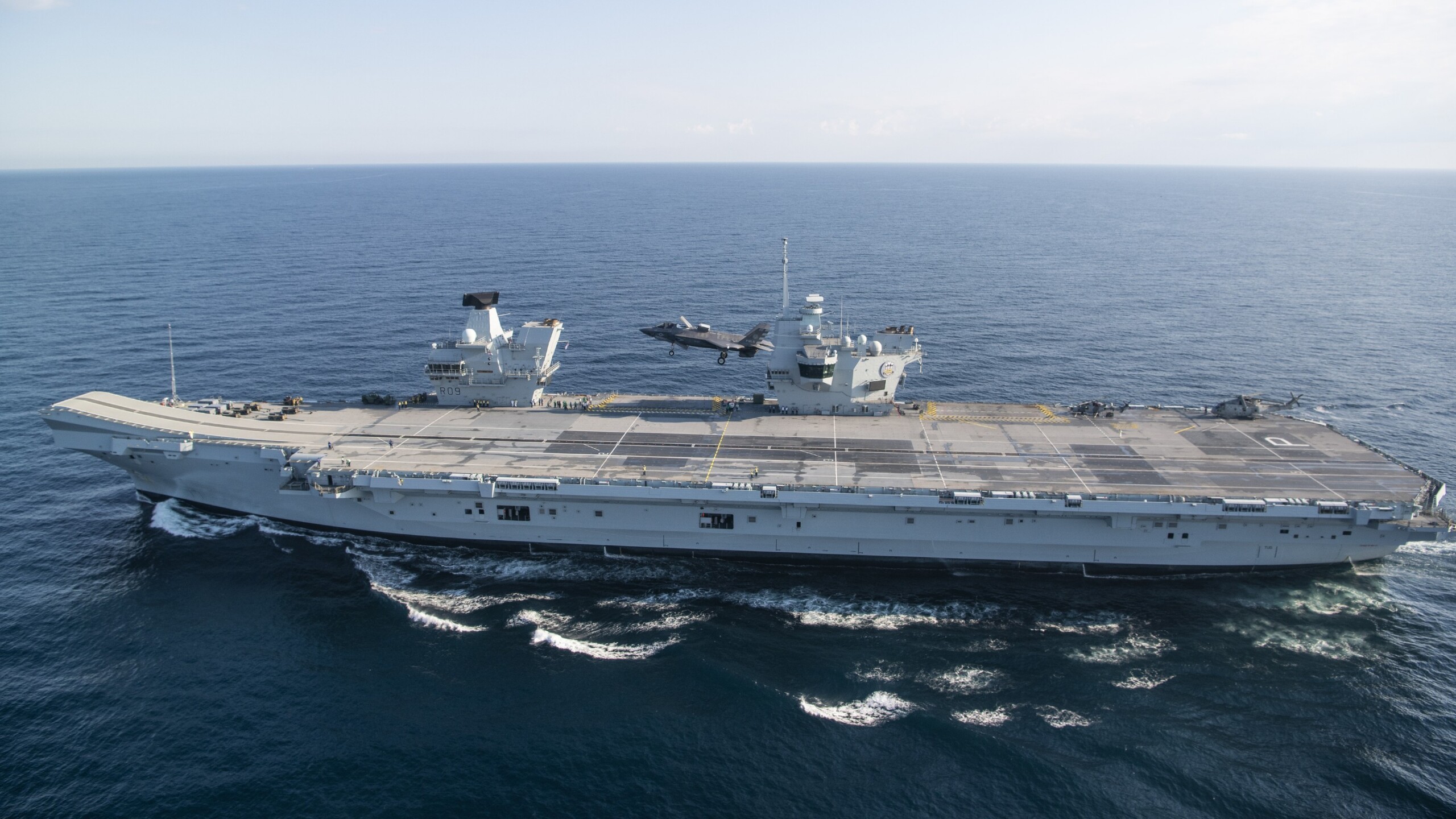
F-35B Releases Meteor Missile From Internal Weapons Bay for First Time
By Khalid · 12 hours ago