Reviving PIA After Privatisation: The Real Work Begins
Privatisation gives Pakistan's flag carrier a second chance. Governance, cost discipline and a restored EASA Part-145 maintenance arm will decide whether it takes off.

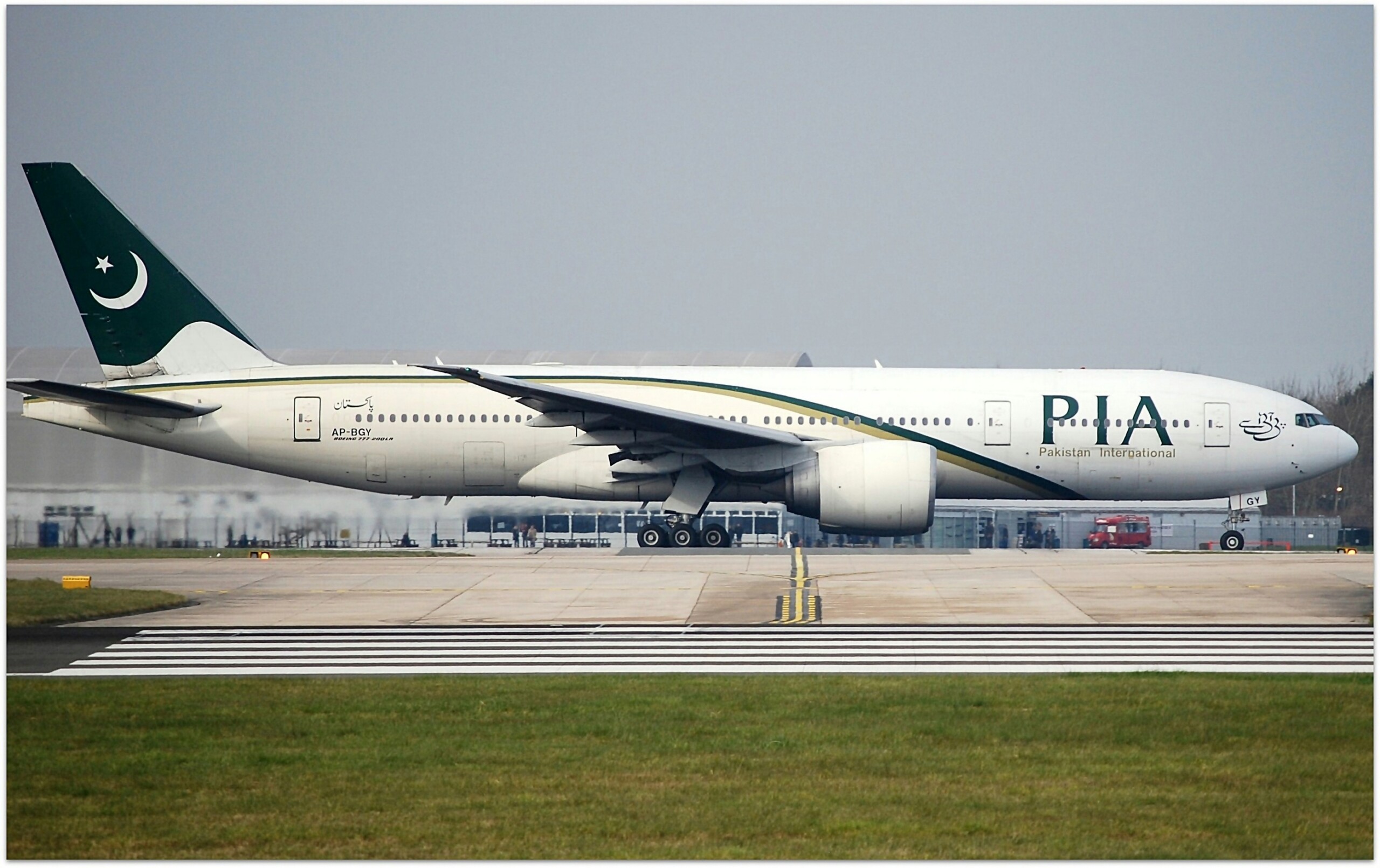
The privatisation of Pakistan International Airlines (PIA) to the Arif Habib Group is one of the most consequential developments in Pakistan’s aviation history. It represents a decisive acknowledgment that decades of state ownership, political interference, and structural inertia had pushed the national carrier to the brink. Yet privatisation is not the solution in itself; it is merely the opportunity. The true challenge now lies in execution, discipline, and the willingness to take difficult, sometimes unpopular decisions.
Governance Reset: Breaking With the Past
The foremost challenge facing the Arif Habib Group is ensuring absolute insulation from political and bureaucratic interference. PIA’s decline was not caused by a lack of pilots, engineers, or infrastructure, but by governance failure: frequent leadership changes, non-commercial directives, and politically motivated hiring. A professional, aviation-led board, a stable management team, and performance-linked accountability are essential if PIA is to function like a commercial airline rather than a state department.
Financial Cleansing and Cost Discipline
A sustainable turnaround is impossible without a clean and transparent balance sheet. While legacy liabilities may be parked outside the privatised entity, the real challenge is preventing old habits from resurfacing. Tight cash control, realistic budgeting, vendor renegotiations, and strict capital allocation discipline will test the new owners early. Any slippage here risks eroding investor confidence and strangling operational recovery before it gains momentum.
Workforce Rationalisation: Necessary but Difficult
PIA’s workforce imbalance is one of its most sensitive challenges. Staff-to-aircraft ratios remain far above international benchmarks, yet wholesale cuts without strategy would be socially disruptive and operationally risky. The path forward lies in voluntary separation schemes, reskilling, and merit-based retention, coupled with a cultural reset that rewards productivity and accountability. Delay in this area will continue to drain resources and slow reform.
Fleet and Network Rationalisation: Economics Over Emotion
For decades, route and fleet decisions were driven by prestige and symbolism rather than profitability. The Arif Habib Group must now impose cold commercial logic: retiring inefficient aircraft, eliminating chronically loss-making routes, and focusing on sectors where PIA can realistically compete. Reliability, punctuality, and yield must take precedence over flag-waving expansion.
Restoring Safety, Compliance and Global Credibility
Aviation credibility is built slowly and lost quickly. PIA’s reputational setbacks with international regulators will require years of consistent compliance, training, and audit discipline to repair. Rebuilding trust with global oversight bodies is not only about safety; it directly affects aircraft leasing terms, insurance costs, route permissions, and strategic partnerships. This is an area where shortcuts simply do not exist.
The Missing Pillar: Reviving PIA’s Lost MRO Business
One of the most strategically important, but often under-discussed, elements of PIA’s revival is the restoration of its lost Maintenance, Repair and Overhaul (MRO) capability, particularly the recovery of EASA Part-145 approval from the European Union Aviation Safety Agency.
Historically, PIA Engineering was a respected regional maintenance provider, servicing third-party aircraft and generating valuable foreign exchange. The loss of Part-145 approval did not just hurt prestige; it eliminated access to one of aviation’s most stable and lucrative revenue streams. Today, foreign airlines route aircraft to Turkey, Sri Lanka, or the UAE for heavy checks that Pakistan could competitively perform if certified.
For the Arif Habib Group, reviving Part-145 approval offers asymmetric upside. A credible MRO arm diversifies revenue beyond passenger operations, lowers PIA’s own maintenance costs, improves aircraft availability, and embeds a strong safety culture across the airline. Successful global airlines are almost always supported by strong maintenance organisations.
EASA Part-66 Changes (2024): A Regulatory Imperative for Pakistan
The urgency to revive Part-145 has intensified following EASA’s 2024 amendments to Part-66. Under the revised rules, new aircraft maintenance engineers seeking EASA B1 or B2 licences must now complete their mandatory on-the-job training (OJT) and practical experience within an EASA Part-145 approved organisation. Part-147 classroom training alone is no longer sufficient for licence issue.
This has created a critical gap in Pakistan. There is currently no EASA Part-145 approved organisation in the country, despite the presence of EASA Part-147 training schools. As a result, Pakistani trainees are forced to seek OJT placements abroad, often in Europe or the Middle East, incurring hefty costs for visas, living expenses, and training fees. For many, this financial burden becomes a career-ending barrier.
By restoring EASA Part-145 approval, PIA could immediately become the primary OJT and licensing bridge for EASA B1/B2 trainees in Pakistan, retaining talent, reducing foreign exchange outflow, and anchoring the national aviation skills pipeline at home.
Digital and Operational Modernisation
None of the above reforms are sustainable without modern digital systems. Integrated ERP, maintenance planning, crew management, and revenue analytics platforms are essential for efficiency, transparency, and scale. Technology will not fix culture on its own, but without it, operational discipline is impossible.
A Test of Vision and Resolve
The privatisation of PIA has given Pakistan’s flag carrier a rare second chance. For the Arif Habib Group, the challenge is formidable but historic: to transform PIA from a loss-making symbol into a resilient, integrated aviation enterprise. Rebuilding routes and fleets will restore visibility, but reviving EASA-certified MRO capability will restore resilience, revenue diversity, and regulatory credibility.
If executed with discipline, courage, and long-term vision, PIA can once again become not just an airline but the anchor of Pakistan’s aviation ecosystem. The runway is finally clear. The take-off now depends entirely on execution.
First published on LinkedIn on 28 December 2025.
Omar Hayat Khan · Founder, CEO & Editor-in-Chief
Omar Hayat Khan is the founder, CEO and Editor-in-Chief of Khaleej Aviation. An aircraft engineer with 26 years in aviation, he is an EASA Part-147 type instructor on the Airbus A350, A320neo (LEAP-1A/PW1100G), Boeing 787, 777 and 737 MAX, with experience across Part-21 design and production organisations and Part-145 line and base maintenance on fixed- and rotary-wing aircraft. He reviews every story Khaleej Aviation publishes.
Meet the masthead →Spotted an error or have a tip? [email protected]
More From Airlines
SEE MORE
Ryanair Expands Kraków Base to 16 Aircraft in Record Winter 2026 Schedule
By Noor · 13 hours ago
FAA Approves JetBlue Acquisition of 22 LaGuardia Airport Slots
By Noor · 13 hours ago
Norse Atlantic Prepares to Retreat From US Market as Capacity Falls by a Third
By Noor · 1 day ago