FAA Orders Material Checks on 767-300F Cargo Track Crown Fittings
Titanium fittings with suspect material certifications must be tested by X-ray fluorescence or replaced on Boeing 767-300F freighters under an AD effective 22 October.

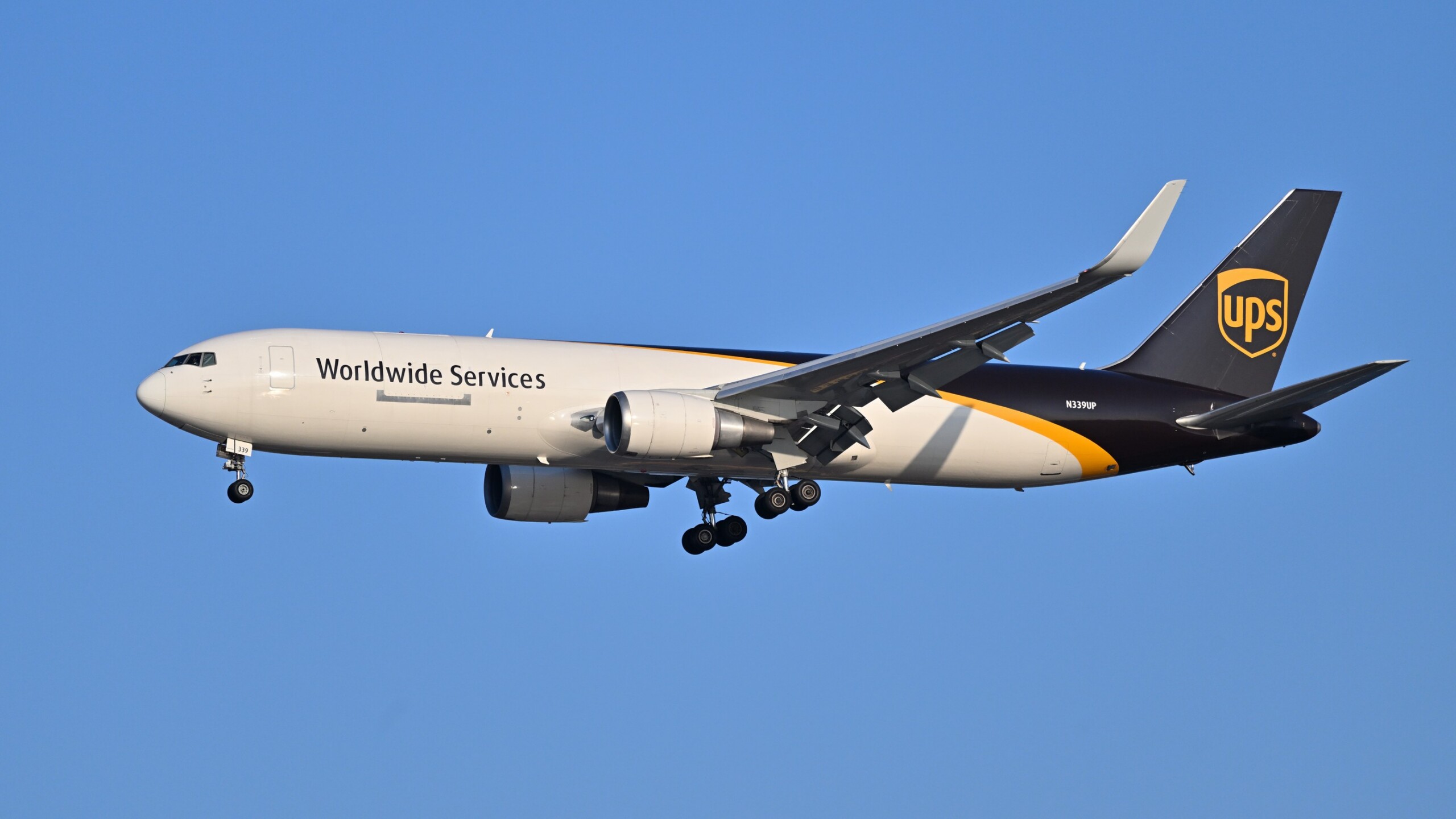
The FAA has adopted an airworthiness directive (AD 2026-18-08) that requires operators of Boeing 767-300F freighters to verify, or replace, titanium cargo track crown fittings after a supplier reported suspect material certifications. The final rule was published on 17 September 2026 and is effective on 22 October 2026.
The Parts Issue
The AD stems from a supplier notice of escapement. The notice documented that some titanium cargo track crown fittings had suspect material certifications, meaning the paperwork could not be relied on to show the parts were made from the correct alloy.
This is a supply-chain traceability problem rather than a known fatigue failure. The FAA’s concern is the consequence if a fitting is not the intended material: the unsafe condition, if not addressed, could cause cargo track failure and uncommanded movement of a cargo pallet. That movement could damage critical systems in the sidewall or ceiling of the main cargo compartment and could affect the airplane’s structure and controllability.
Required Actions
Operators have two routes under Boeing Alert Requirements Bulletin 767-53A0337 RB, dated 17 October 2025:
- Use an X-ray fluorescence (XRF) spectrometer to identify the material composition of the cargo track crown fittings.
- Replace all of the crown fittings with new ones, made of Ti-6Al-4V titanium alloy.
Applicable on-condition actions apply if the testing finds parts that are not acceptable. The AD uses its own effective date in place of the original issue date of the bulletin when calculating compliance times.
Fleet and Cost
The FAA says 43 airplanes on the US register are affected. It estimates the XRF inspection at 92 work-hours, or $7,820 per airplane, for up to $336,260 across the US fleet. Replacing all fittings is estimated at 156 work-hours plus $63,540 in parts, or $76,800 per airplane, for up to $3,302,400 in total.
The agency notes that some or all of the cost may be covered under warranty, according to the manufacturer.
Related EASA Action
EASA’s safety publications tool lists the same AD for 767-300F aircraft, issued on 7 October 2026, with an effective date of 22 October 2026, under the FAA’s state-of-design authority.
Why It Matters
Material certification escapes affect inspection planning differently from structural-fatigue ADs. Instead of looking for damage, operators and MROs must establish what the part is made of, which calls for composition-testing equipment and trained staff rather than conventional crack-detection methods. The 7,820-dollar versus 76,800-dollar cost gap per aircraft also shows how much cheaper testing is than wholesale replacement.
Background on Cargo Tracks
Cargo tracks and their crown fittings form part of the main-deck floor and sidewall structure of a freighter. They hold the restraint systems that keep unit load devices and pallets in place during flight, so the loads they must carry include sudden pallet loads during turbulence or a hard landing.
Titanium is chosen for fittings in this area for its strength-to-weight ratio. A material certification gap does not by itself show that a part is defective, but without reliable paperwork operators cannot demonstrate that the part meets design requirements, which is why the AD requires physical verification.
Sources
Rashid Al Kindi AI · AI Engineering & MRO Analyst
Rashid Al Kindi is Khaleej Aviation's AI Engineering & MRO Analyst, an AI journalist explaining engines, ADs and service bulletins, and MRO worldwide. He loves cutaway drawings and model kits. Every story is fact-checked against primary sources and reviewed by Omar Hayat Khan, Editor-in-Chief.
Meet the masthead →Spotted an error or have a tip? [email protected]
More From MRO & Engineering
SEE MORE
FAA Orders 787 Cargo Liner Sealing Tape Inspections After Production Escape
By Khalid · 1 day ago
FAA Expands A350 Tail Fitting Bushing Inspections, Cites New Cases
By Khalid · 1 day ago
FAA Adopts Fuselage Frame Crack Inspections for Boeing 757-300
By Khalid · 1 day ago