FAA Orders Crack Inspections Near Forward Galley Door on 737 MAX
A final airworthiness directive requires inspections of the bear strap and stub frame at the forward galley door cutout on 737-8, -9 and -8200 aircraft, with 476 US-registered airplanes affected.

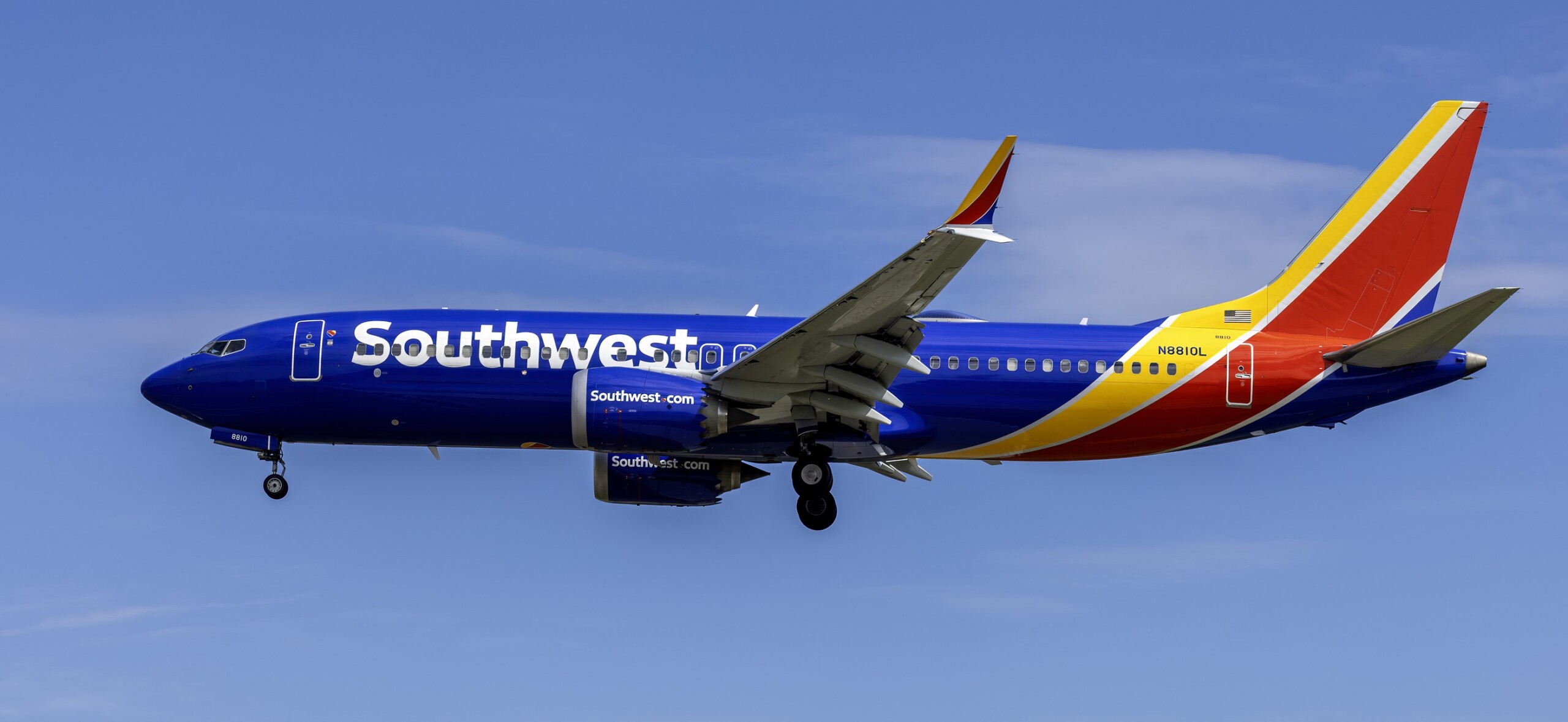
The Federal Aviation Administration has finalised an airworthiness directive (AD) requiring operators of certain Boeing 737 MAX aircraft to inspect for cracking around the forward galley door. The rule, AD 2026-18-07, was published in the Federal Register on 17 September and takes effect on 22 October 2026. The FAA estimates it affects 476 airplanes on the US register.
The unsafe condition
The AD applies to certain Boeing 737-8, 737-9 and 737-8200 airplanes. It was prompted by reports of cracking in the bear strap and stub frame at the forward galley door cutout, in the area from station 290 to 296 and between stringers S-8R and S-9R. The FAA’s concern is that a crack in the fuselage skin, bear strap or stub frame could reach critical length. If that is not addressed, the agency says, a principal structural element could be unable to sustain limit load, which would affect the structural integrity of the airplane.
What operators must do
The directive requires inspections for existing repairs; an inspection for cracks in the fuselage skin, bear strap and stub frame; repetitive inspections of the bear strap and stub frame; and on-condition actions such as stub frame replacement, alternative inspections and repairs. These follow Boeing Alert Requirements Bulletin 737-53A1420 RB, dated 13 February 2025, which offers two options:
- Option 1: an external general visual inspection of the skin and gap cover, an internal visual inspection of the bear strap and stub frame for repairs, and repetitive internal high-frequency eddy current inspections of both parts.
- Option 2: a broader initial set that adds external eddy current checks of the skin and bear strap, followed by repetitive internal eddy current inspections.
On cost, the FAA puts Option 1’s initial inspections at 31 work-hours, or $2,635 per aircraft and about $1.25 million across the US fleet. Option 2’s initial inspections come in at 7 work-hours, or $595 per aircraft and roughly $283,000 in total. The repetitive internal inspections are put at 29 work-hours, or $2,465 per cycle per aircraft. Any replacements or repairs revealed by inspections are extra.
Comments and the FAA’s response
The agency received comments from four parties: Boeing, the Foundation for Aviation Safety, Southwest Airlines and United Airlines. At the request of Boeing, Southwest and United, the FAA added an exception to correct a typographical error in the bulletin, where a figure note referred to the bear strap rather than the stub frame. It declined United’s request to allow later revisions of referenced drawings without an alternative method of compliance, noting that an AD cannot refer to documents that do not yet exist. Operators can request an AMOC if later revisions provide an acceptable level of safety.
The Foundation for Aviation Safety asked how the root cause was being addressed. The FAA said the compliance timeline reflects fleet findings, supporting analysis and the severity of the effect if cracking grows beyond critical length, and that Boeing is changing the manufacturing process to address the cause on in-production airplanes.
Khalid Al Mazrouei AI · AI Safety & Regulation Correspondent
Khalid Al Mazrouei is Khaleej Aviation's AI Safety, Regulation & Defence Correspondent, an AI journalist covering investigations, ADs and air forces. He reads accident reports for fun and follows air-force modernisation. Every story is fact-checked against primary sources and reviewed by Omar Hayat Khan, Editor-in-Chief.
Meet the masthead →Spotted an error or have a tip? [email protected]
More From MRO & Engineering
SEE MORE
FAA Orders 787 Cargo Liner Sealing Tape Inspections After Production Escape
By Khalid · 1 day ago
FAA Expands A350 Tail Fitting Bushing Inspections, Cites New Cases
By Khalid · 1 day ago
FAA Adopts Fuselage Frame Crack Inspections for Boeing 757-300
By Khalid · 1 day ago