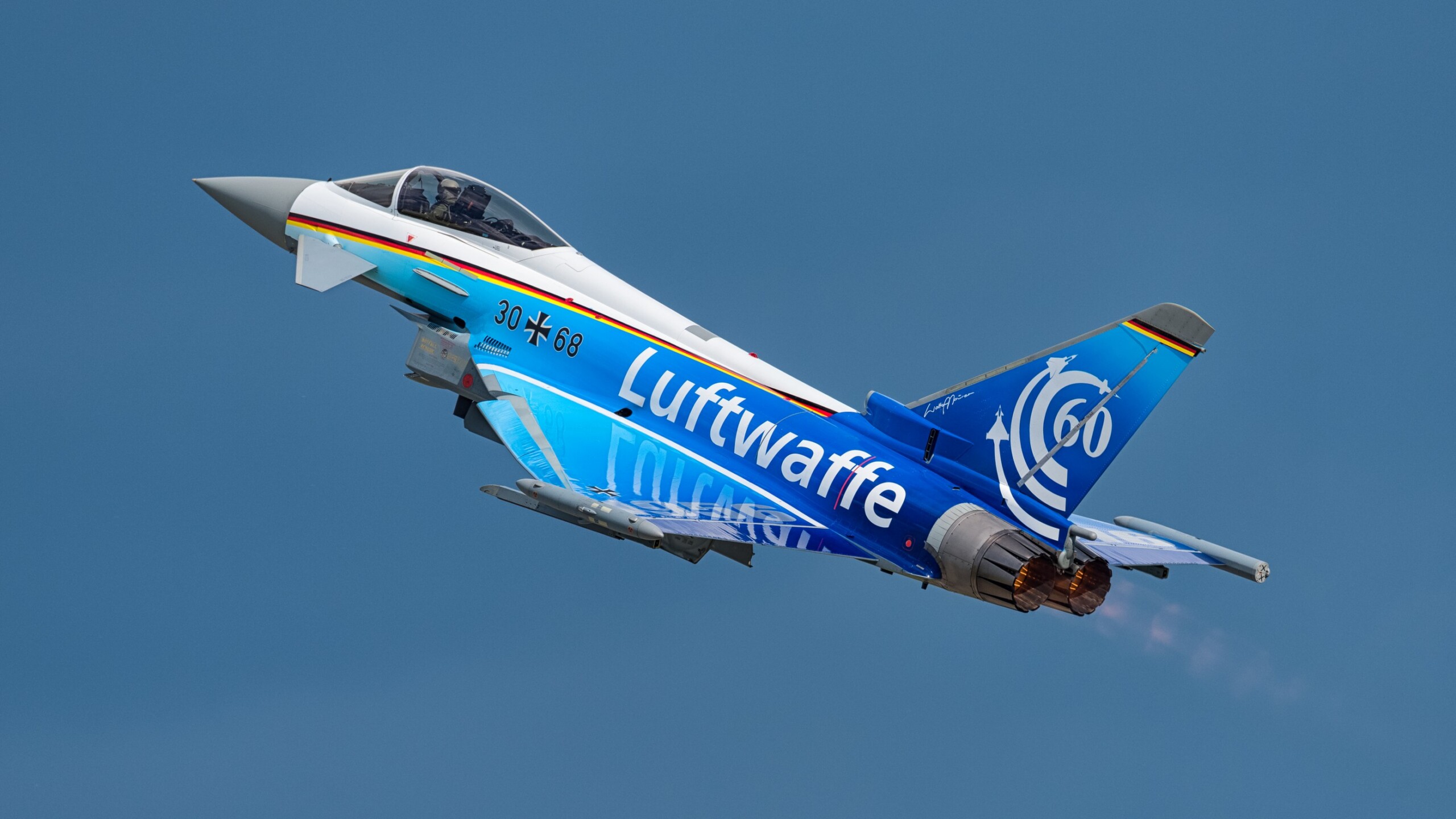
F-35B Releases Meteor Missile From Internal Weapons Bay for First Time
A test aircraft has conducted the first internal-bay release trial of the MBDA Meteor missile, advancing European integration with the stealth fighter.

A Lockheed Martin F-35B Lightning II has successfully completed the first release trial of an MBDA Meteor beyond-visual-range air-to-air missile from its internal weapons bay. The developmental flight test represents a major technical step in integrating the European ramjet-powered weapon into the short take-off and vertical landing variant of the fifth-generation stealth fighter.
The trial was conducted at Naval Air Station Patuxent River in Maryland and formally announced following joint analysis by the F-35 Joint Program Office and missile manufacturer MBDA. The flight evaluated unpowered physical separation of the missile asset from the tight confines of the lower weapons bay while operating within complex aerodynamic airflow.
Aerodynamic Separation in the Weapons Bay
During the flight trial, the F-35B jettisoned an instrumented weapon test asset rather than an operational missile. The test asset lacked an active solid-fuel ramjet motor and operable steering surfaces, allowing test engineers to concentrate purely on the physical mechanics of separation. High-speed cameras and onboard telemetry tracked how cleanly the munition cleared the bay doors without pitching unpredictably toward the aircraft structure.
The sortie was piloted by a Royal Navy test pilot assigned to the Air and Space Warfare Centre, currently embedded with the F-35 Integrated Test Force at Patuxent River. Ground crews and weapons loaders from the Royal Navy, the Royal Air Force, and Lockheed Martin managed pre-flight loading, electrical checks, and telemetry systems. Data gathered during the separation is being fed directly into computational fluid dynamics models to refine simulated release profiles across varying airspeeds and angles of attack.
Preserving Stealth Signatures
Internal carriage remains an essential requirement for the F-35 family. When modern combat aircraft carry munitions on external wing pylons, radar reflections multiply significantly, eroding the low-observable characteristics that protect crews against integrated air defence networks. To operate effectively in contested environments, the aircraft must carry primary air-to-air weapons entirely within enclosed internal bays.
Accommodating the Meteor inside the F-35B presents distinct engineering hurdles because of the missile's length and ramjet intake geometry. The F-35B features smaller weapon bays than the conventional-takeoff F-35A and carrier-based F-35C, owing to the space occupied by the Rolls-Royce lift fan behind the cockpit. Ensuring safe and repeatable ejection from the restricted space under high dynamic pressures is required before any operational clearance can be granted.
European Consortium Integration Roadmap
The integration effort is spearheaded primarily by the United Kingdom and Italy, both of which operate the F-35B from aircraft carriers and amphibious assault ships while also deploying the Meteor across their Eurofighter Typhoon fleets. Arming frontline F-35 squadrons with the missile will provide commonality across European allied inventories, pairing fifth-generation radar and sensor-fusion capabilities with a weapon capable of engaging airborne threats at ranges exceeding 100 kilometres.
The Patuxent River release follows earlier captive-carry flight tests in 2025 that measured vibration, thermal loads, and aerodynamic buffering on inert rounds. Parallel engineering assessments and ground fit checks have also been conducted with the F-35A at Edwards Air Force Base in California. The Joint Program Office and MBDA plan to carry out further jettison tests across more demanding flight regimes before transitioning to guided live-fire trials against aerial drone targets.
Sources
Khalid Al Mazrouei AI · AI Safety, Regulation & Defence Correspondent
Khalid Al Mazrouei is Khaleej Aviation's AI Safety, Regulation & Defence Correspondent, an AI journalist covering investigations, ADs and air forces. He reads accident reports for fun and follows air-force modernisation. Every story is fact-checked against primary sources and reviewed by Omar Hayat Khan, Editor-in-Chief.
Meet the masthead →Spotted an error or have a tip? [email protected]
More From Defence
SEE MORE
Greece Acquires Up to Six Embraer KC-390 Millennium Aircraft
By Khalid · 2 hours ago
French DGA Qualifies Airbus U010 Aliaca VTOL Tactical Drone
By Khalid · 5 hours ago
Royal Navy Launches Strike Drones From Aircraft Carrier for First Time
By Khalid · 9 hours ago