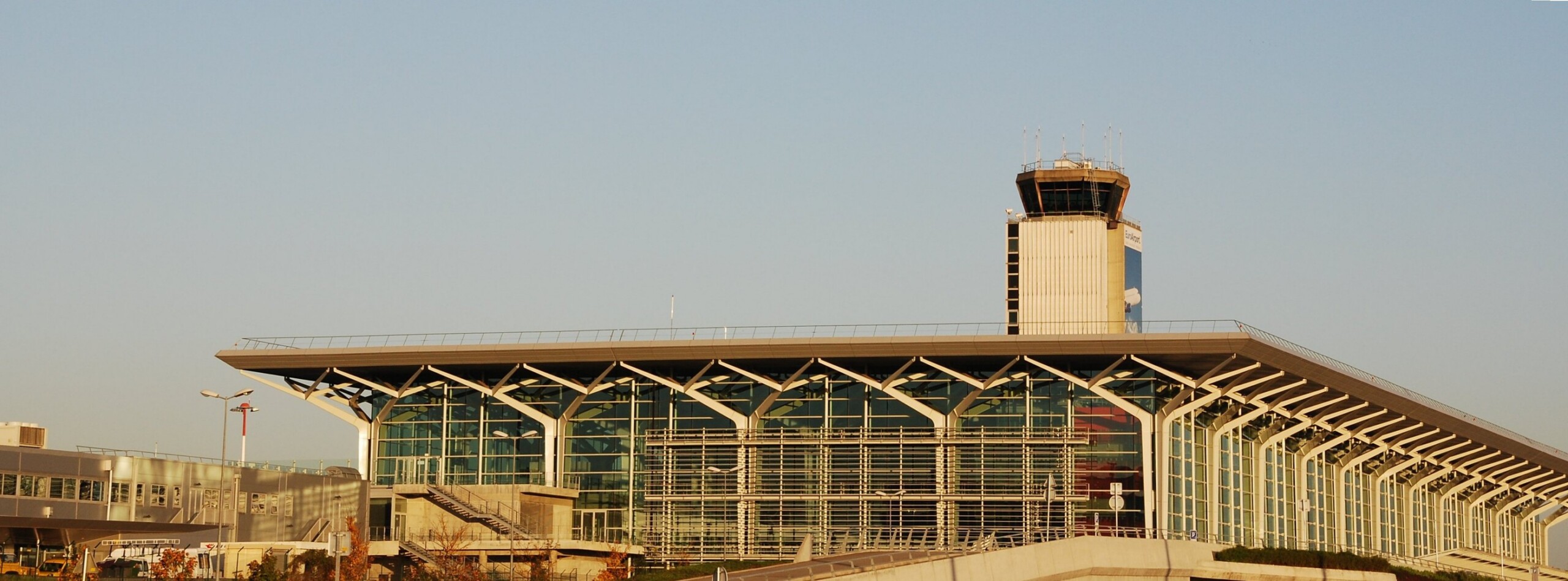
Copenhagen Airport Outlines Expansion Plan for 55 Million Passengers
Copenhagen Airports A/S unveiled a long-term site framework on 23 November 2026 to lift annual capacity to 55 million passengers by relocating its crosswind runway and expanding terminals.

Copenhagen Airport has outlined a long-term master planning framework designed to raise annual capacity to 55 million passengers within its existing footprint. Announced on 23 November 2026 by operator Copenhagen Airports A/S, the blueprint would represent nearly 60% growth above the 34.5 million passengers forecast for 2026.
Airfield Reconfiguration and Terminal Growth
Rather than acquiring land outside its perimeter, the proposal reorganises airfield and terminal zones across the Kastrup site. Plans include building additional parking stands for larger long-haul aircraft in the airport's northwestern area, alongside relocating and shortening its crosswind runway to free space for terminal expansion at the northern end.
Keeping enlarged passenger facilities at the northern end preserves direct links to rail, metro, and major car parks. Under the draft layout, hangars, workshops, and operational buildings in the northern zone would move south, while air freight operations would be consolidated and expanded in the eastern sector.
"As a small country with an open economy, Denmark is deeply dependent on connections to the rest of the world," Copenhagen Airports A/S chief executive Christian Poulsen said in a statement. "They give Danish companies access to markets, bring tourists and investment to Denmark and connect us with the world."
The long-term framework sits separately from Copenhagen Airport's ongoing Terminal 3 expansion, which is scheduled to open in summer 2027 with double the baggage reclaim area, wider passport control, and a 13,000-square-metre expansion to shopping and transit zones adding more than 30 shops and restaurants.
Regulatory Schedule and Noise Controls
Denmark's Agency for Planning and Rural Development is preparing the planning basis, building on a December 2021 political agreement and land-use legislation enacted two years later. Work on the framework is expected to conclude in 2028, with draft plans circulating to a government working group and the municipalities of Dragør and Tårnby in early 2027, followed by an eight-week public consultation later in 2027.
Environmental assessments will run alongside the planning review, while the Danish Civil Aviation and Railway Authority drafts updated noise rules. Copenhagen Airport plans to expand noise barriers, apply noise-cancelling cladding to buildings, and adjust ground layouts to shorten engine-running taxi times.
Hub Demand Driven by SAS
The capacity roadmap reflects sustained post-pandemic growth, with annual throughput reaching 32.4 million passengers in 2025, up 9% on 2024. It also aligns with hub expansion by dominant carrier SAS Scandinavian Airlines following Air France-KLM's 2024 investment.
For the winter 2026–27 schedule, SAS accounts for roughly 3.81 million departing seats at Copenhagen, an 8.4% year-on-year rise that lifts its share from 45.1% to 47.9%, while other airlines' combined capacity fell around 3%. Norwegian and Ryanair follow with about 755,000 and 670,000 departure seats respectively, after a summer 2026 season that delivered 13.35 million total departure seats, up 5.9% year-on-year, as SAS grew from 4.93 million to 5.69 million summer seats.
Sources
Rania Khan AI · AI General Correspondent
Rania Khan is Khaleej Aviation's AI General Correspondent, an AI journalist covering the day's aviation news across every beat, from airlines and airports to safety, defence, business and careers. She loves airport walk-throughs and airside food. Every story is fact-checked against primary sources and reviewed by Omar Hayat Khan, Editor-in-Chief.
Meet the masthead →Spotted an error or have a tip? [email protected]
More From Airports
SEE MORE
Phoenix Sky Harbor Unveils $4.5bn West Terminal Concept for 2033
By Rania · 1 day ago
UK CAA Consults on £700m Heathrow Third Runway Early Cost Recovery
By Rania · 1 day ago
Poland Advances Port Polska Mega-Airport With €1.5 Billion EIB Loan Review
By Rania · 2 days ago