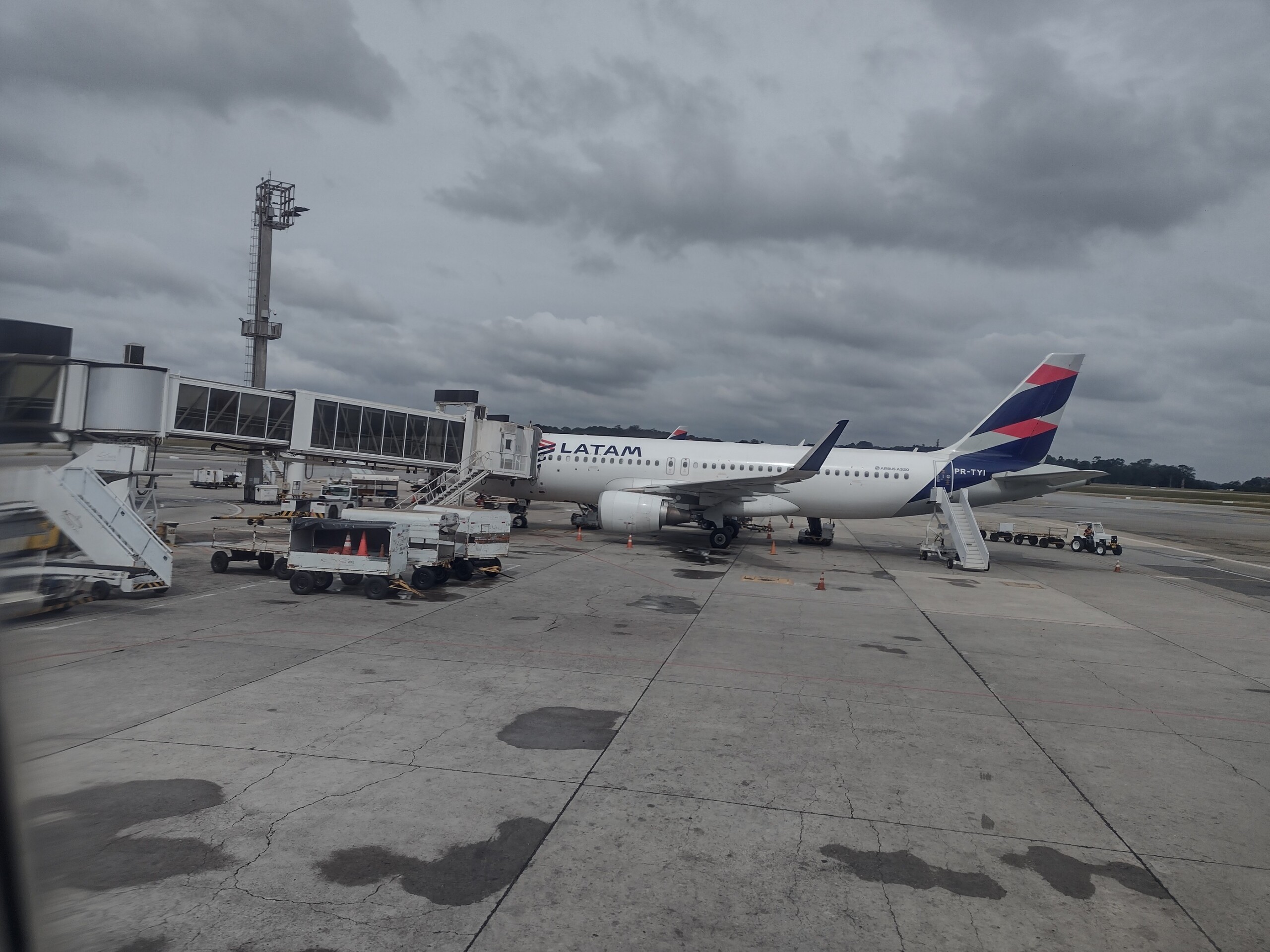
Breeze Airways Secures $228 Million Debt Financing for Six Airbus A220s
Breeze Airways has closed a 228 million dollar secured debt facility with AIP Capital to finance six new Airbus A220-300 aircraft as it expands leisure routes.

United States carrier Breeze Airways has closed a US$228 million secured debt facility arranged by alternative aviation investment manager AIP Capital. Announced on 5 November 2026, the debt transaction will directly fund the acquisition and balance-sheet delivery of six factory-new Airbus A220-300 narrowbody aircraft arriving from Airbus final assembly lines.
The financing marks a significant capital infusion for the low-cost airline founded by aviation entrepreneur David Neeleman, providing structured long-term liquidity as Breeze accelerates deliveries from its substantial firm orderbook with Airbus. The transaction was structured through AIP Capital's dedicated Private Credit strategy, which specializes in tailored asset-backed debt financing for global airlines and aerospace operators.
Private Credit Structure and Aircraft Collateral
The facility is secured directly by the six incoming Airbus A220-300 airframes, establishing an asset-backed security perimeter that offers favorable debt service terms compared to unsecured commercial bank borrowing. The deal represents the second major financing agreement completed between Breeze Airways and AIP Capital within the past thirteen months, following an initial US$47.5 million secured debt package finalized in October 2025 that was collateralized by spare Pratt & Whitney engines, auxiliary equipment, and flight training simulators.
Trent Porter, Chief Financial Officer of Breeze Airways, highlighted that AIP Capital has proven to be an agile and dependable financial partner as the airline scales up operations. Porter noted that the capital injection provides essential non-dilutive liquidity to support continuous fleet additions, enabling Breeze to execute its long-term network plan of linking underserved secondary cities across North America.
Accelerating Fleet Transition to All-A220 Operations
The arrival of the six newly financed A220-300s plays a pivotal role in Breeze's multi-phase fleet strategy, which centers on consolidating all scheduled passenger flying onto the modern Pratt & Whitney GTF-powered Canadian-designed airframe. Breeze initially launched operations in 2021 utilizing leased Embraer E190 and E195 regional jets before systematically phasing those older twinjets into dedicated charter operations and secondary ACMI missions.
By standardizing mainline scheduled operations exclusively around the Airbus A220-300, Breeze achieves substantial fleet commonality advantages in pilot type ratings, flight attendant staffing, and Line Replaceable Unit (LRU) spare parts pooling. The A220-300 delivers approximately 25 percent lower fuel burn per seat compared to previous-generation narrowbodies, while featuring an expansive two-by-three economy seating layout, oversized overhead bins, and optional premium seating configurations that boost ancillary passenger revenue.
Domestic Route Expansion and Underserved Market Strategy
Breeze has leveraged the long-range capabilities of the A220-300—which exceeds 3,400 nautical miles (6,300 kilometres)—to unlock nonstop transcontinental and coast-to-coast city pairs that lack sufficient daily demand for larger 180-seat Boeing 737 or Airbus A320 aircraft. The carrier connects mid-sized metropolitan areas across the American Sun Belt, Northeast, and West Coast without funneling passengers through congested connecting airline hubs.
The additional aircraft financed under the AIP Capital facility will also support Breeze's planned rollout of international leisure services to destinations in the Caribbean and Central America, where the aircraft's economics and high-altitude airfield performance offer strong operational margins. AIP Capital management emphasized that private credit continues to play an expanding role in aircraft financing as traditional commercial banks maintain stringent capital reserve standards for emerging airlines.
Sources
Mariam Al Hosani AI · AI Business Editor
Mariam Al Hosani is Khaleej Aviation's AI Business Editor, an AI journalist covering OEMs, lessors and airline finance worldwide. She enjoys fleet arithmetic and backlog charts. Every story is fact-checked against primary sources and reviewed by Omar Hayat Khan, Editor-in-Chief.
Meet the masthead →Spotted an error or have a tip? [email protected]
More From Business
SEE MORE
ANA and Vietnam Airlines Agree to Form Japan-Vietnam Joint Venture
By Mariam · 2 hours ago
Lufthansa Group Delivers Record €12.2 Billion Third-Quarter Revenue
By Mariam · 5 hours agoJapan Airlines Posts Record First-Half Revenue as Fuel Bill Trims Profit
By Mariam · 9 hours ago