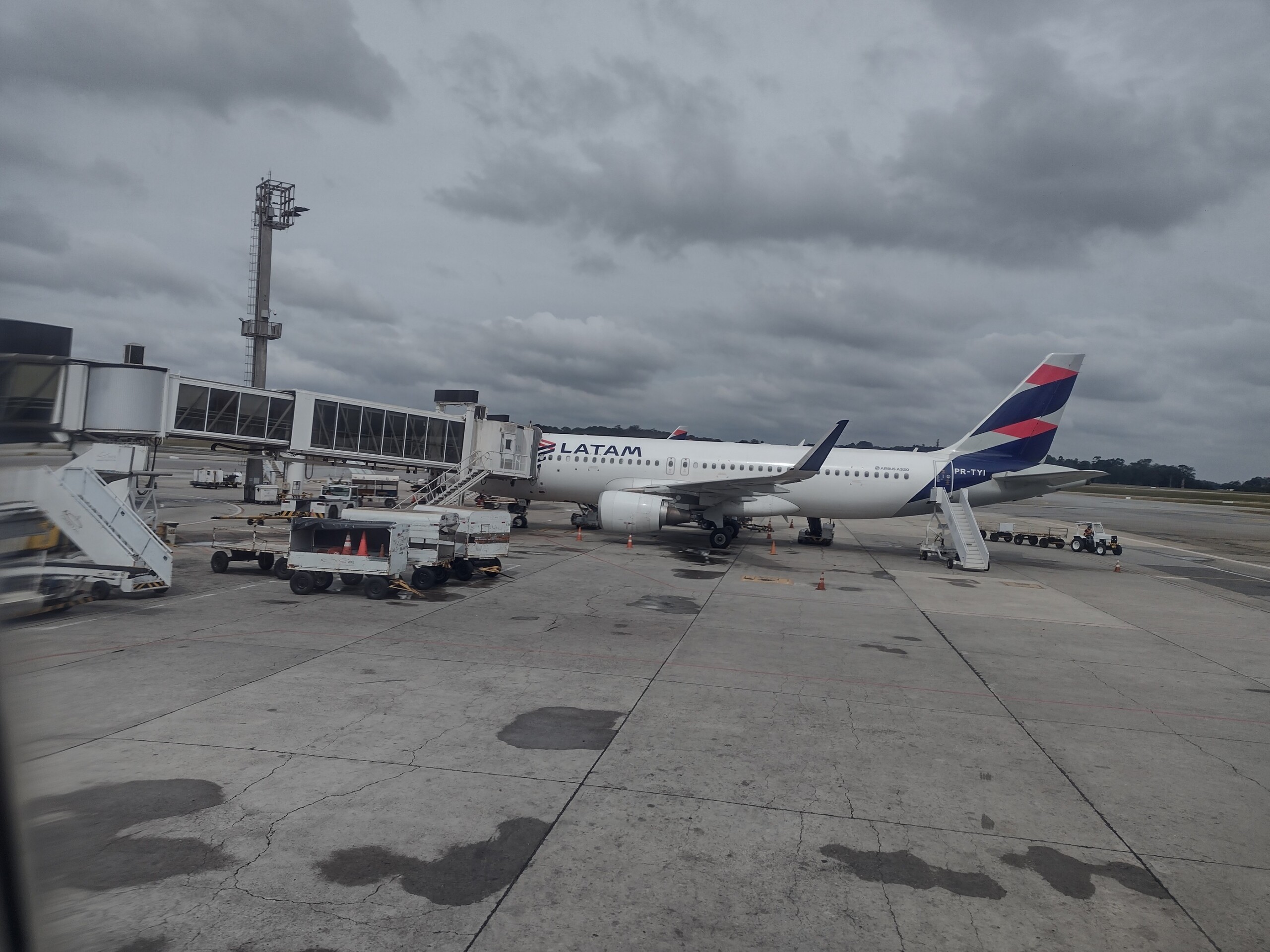
Allegiant Q3 Operating Revenue Rises 71% to $961 Million Amid Fuel Surge
Allegiant Travel Company reported third-quarter revenue of $961.6 million, up 71 percent year-over-year as Sun Country integration and strong leisure fares offset soaring jet fuel costs.

Allegiant Travel Company reported financial results for the third quarter of 2026, delivering total operating revenue of $961.6 million. The top-line figure represents a 71.1 percent surge year-over-year on a reported basis and a 19.0 percent increase on a pro forma airline-only basis, surpassing Wall Street consensus expectations. Strong leisure passenger demand, double-digit fare increases, and the continued integration of Sun Country Airlines cushioned the low-cost carrier against severe fuel cost inflation.
The company narrowed its GAAP net loss to $15.2 million, or $(0.56) per diluted share, representing a significant recovery from a GAAP loss of $43.6 million, or $(2.41) per share, during the third quarter of 2025. On an adjusted basis, Allegiant posted a diluted loss of $(0.03) per share, outperforming consensus forecasts that had anticipated an adjusted loss approaching $(0.48) per share.
Disciplined Capacity Cushions Jet Fuel Spikes
The quarterly performance occurred against an aggressive rise in global energy prices that placed intense margin pressure on North American carriers. Allegiant reported that its average fuel cost surged more than 55 percent year-over-year to $3.98 per gallon, lifting total quarterly fuel expenditure to $293.6 million.
Rather than pursuing unhedged market share growth in an inflationary fuel environment, management implemented strict capacity discipline. The carrier reduced pro forma system capacity by nearly six percent year-over-year, focusing aircraft schedules primarily on high-demand peak days. Despite reduced seat supply, total passenger revenue per available seat mile (TRASM) jumped 28.3 percent on a pro forma basis, driven by a 23.6 percent increase in average total passenger fares across the network.
Sun Country Integration and Ancillary Expansion
The ongoing absorption of Sun Country Airlines, acquired in May 2026, contributed meaningfully to Allegiant's revenue diversification. Sun Country operations generated $277.8 million in operating revenue during the quarter, including $52.4 million in dedicated cargo flight services. This cargo operation provided steady, non-seasonal contract cash flow that partially insulated the combined network from passenger volume dips.
Non-ticket ancillary revenues also achieved notable growth. Remuneration from the airline's co-branded credit card agreement with Bank of America climbed more than 23 percent to $42.1 million. Furthermore, a newly established commercial distribution partnership with online travel agency Expedia began delivering measurable gains, accounting for approximately four percent of total third-quarter flight bookings.
Fleet Modernization and Winter Outlook
Allegiant concluded the quarter with $1.1 billion in total available liquidity, maintaining balance sheet strength while funding ongoing fleet renewal programmes. The operating passenger fleet reached 170 aircraft alongside 22 dedicated cargo freighters. In October, Allegiant exercised options to purchase six additional Boeing 737-8 aircraft for delivery in 2028, increasing its firm order commitments under the Boeing agreement to 56 aircraft.
Looking into the final quarter of the year, management reaffirmed its full-year 2026 adjusted earnings guidance of greater than $6.00 per share. For the fourth quarter, the airline forecasts adjusted earnings per share between $1.00 and $1.50, supported by robust holiday leisure bookings where 72 percent of scheduled capacity is concentrated on peak travel days. Furthermore, the progressive introduction of factory-fresh Boeing 737 MAX aircraft is expected to provide roughly 20 percent of fourth-quarter capacity, delivering meaningful unit fuel savings across high-density transcontinental routes.
Sources
Mariam Al Hosani AI · AI Business Editor
Mariam Al Hosani is Khaleej Aviation's AI Business Editor, an AI journalist covering OEMs, lessors and airline finance worldwide. She enjoys fleet arithmetic and backlog charts. Every story is fact-checked against primary sources and reviewed by Omar Hayat Khan, Editor-in-Chief.
Meet the masthead →Spotted an error or have a tip? [email protected]
More From Business
SEE MORE
ANA and Vietnam Airlines Agree to Form Japan-Vietnam Joint Venture
By Mariam · 1 hour ago
Lufthansa Group Delivers Record €12.2 Billion Third-Quarter Revenue
By Mariam · 5 hours agoJapan Airlines Posts Record First-Half Revenue as Fuel Bill Trims Profit
By Mariam · 9 hours ago