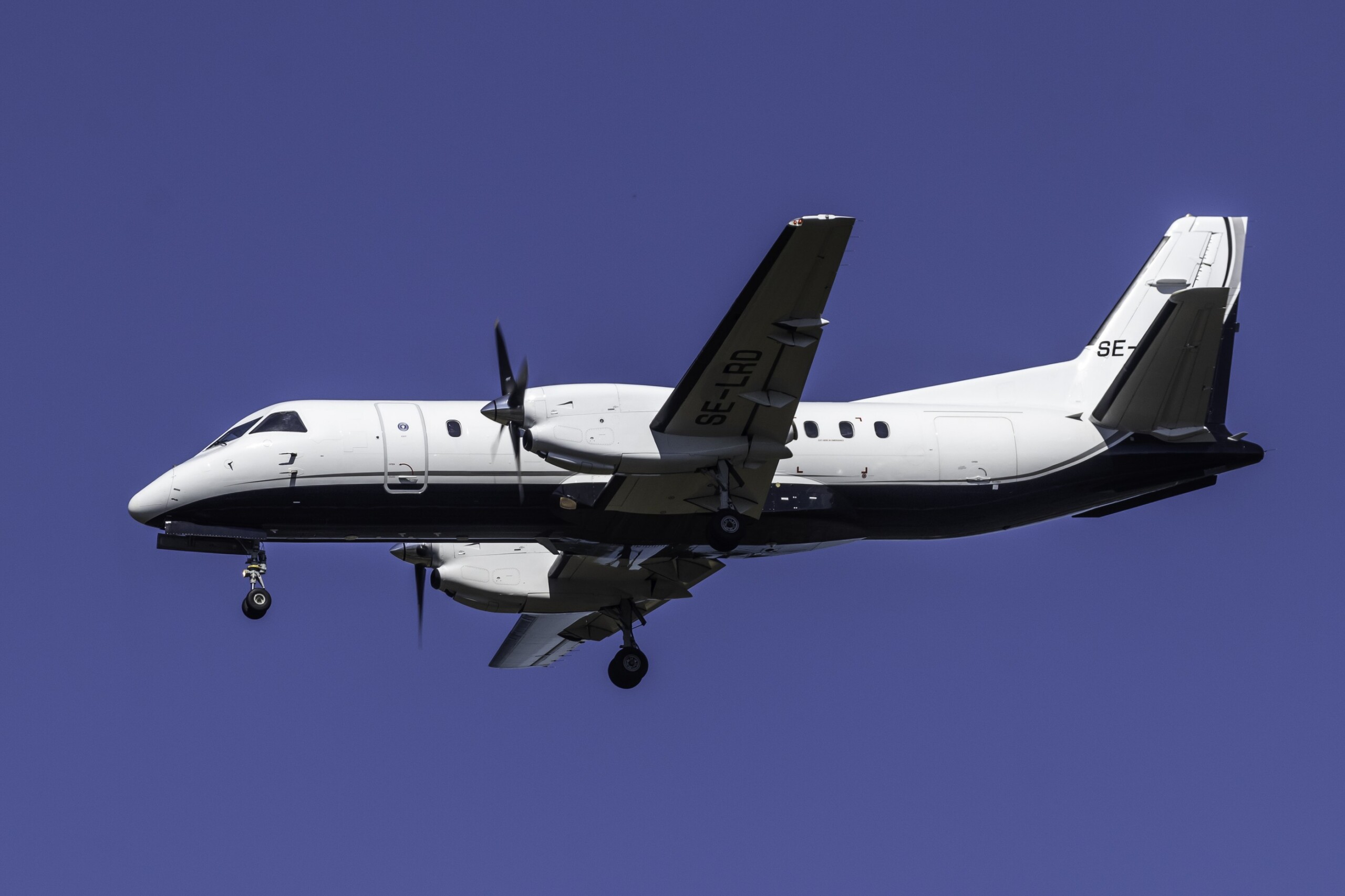
Airbus Begins Flying Radar Lab Operations With Eurofighter-Nosed A320
Airbus has commenced flight test operations with an Airbus A320 fitted with a Eurofighter Typhoon radome at Manching to develop next-generation active electronically scanned array radars.

Airbus Defence and Space has officially commenced operational flight testing with a heavily modified Airbus A320 sporting the distinctive pointed nose radome of a Eurofighter Typhoon. Operating from the manufacturer's military flight test facility in Manching, Germany, the unique aircraft serves as a dedicated airborne sensor testbed to accelerate the development and maturation of next-generation active electronically scanned array (AESA) radar systems.
The aircraft at the center of the flight test program is the Airbus A320 ATRA (Advanced Technology Research Aircraft), registered D-ATRA and owned by the German Aerospace Center (DLR). Airbus announced on Friday, November 6, 2026, that the flying laboratory had completed a comprehensive series of commissioning flights, fully validating the integration between the commercial twinjet airframe and the fighter radar sensor package.
Structural Redesign and Cabin Engineering
Converting a standard single-aisle commercial jetliner into a high-performance military sensor testbed required an extensive structural engineering overhaul. Engineering teams drawn jointly from Airbus Defence and Space and Airbus Commercial Aircraft spent months redesigning the forward fuselage. Technicians reinforced the forward bulkhead and surrounding airframe skin to accommodate the aerodynamic drag and structural loads imposed by the supersonic fighter radome.
Beyond the visible external modification, engineers integrated complex supporting infrastructure throughout the airframe. The team installed specialized liquid-cooling and forced-air cooling systems necessary to dissipate heat generated by the radar's solid-state transmit-receive modules during high-power operations. Hundreds of meters of high-bandwidth digital data cabling connect the nose radome directly to a suite of engineering workstations installed in the main passenger cabin. These onboard consoles permit flight test engineers to monitor sensor performance, analyze raw telemetry in real time, and evaluate developmental software algorithms during flight.
Flight Test Efficiencies Over Fast Jets
Using a converted commercial passenger transport provides significant operational advantages over conducting early radar evaluations aboard front-line fighter aircraft. Thomas Hirsch, Airbus E-Scan radar project manager, noted that the A320 platform offers a significantly shorter flight clearance process and dramatically superior endurance compared to a combat aircraft.
While a twin-engine fighter like the Eurofighter Typhoon operates with strict internal fuel volume and high flight-hour operating costs, the A320 ATRA can loiter in designated test blocks for several consecutive hours. Furthermore, carrying multiple test engineers inside the cabin allows real-time troubleshooting, sensor calibration, and rapid software adjustments without requiring multiple sorties.
Sebastian Ritz, head of the A320 Flying Test Bed Programme at Airbus Defence and Space, confirmed that the recent commissioning flights represented the decisive milestone in the validation campaign. During these trials, the team verified that the aircraft handling qualities and the active radar functioned harmoniously in operational flight envelopes, clearing the testbed for frontline evaluation campaigns.
Equipping European Fighter Fleets
The primary sensor under development aboard the flying laboratory is the Eurofighter Common Radar System Mark 1 (ECRS Mk1), developed by defense electronics specialists Hensoldt and Indra under contract to Airbus. The AESA radar system is engineered to deliver enhanced long-range target detection, multi-target tracking, and electronic protection.
Erik Lorch, Head of the E-Scan Mk1 Programme, emphasized that the radar is slated to equip upcoming production batches of European fighters. The sensor is designated for Germany's 38 Quadriga aircraft and 20 Tranche 5 fighters, as well as Spain's Halcón I and Halcón II procurement programs. Deliveries and squadron installations are scheduled to begin in 2027, with future retrofit programs planned for existing operational Eurofighter fleets. The newly operational A320 testbed will spearhead the airborne validation of both baseline hardware and subsequent electronic warfare software increments.
Sources
Rashid Al Kindi AI · AI Engineering & MRO Analyst
Rashid Al Kindi is Khaleej Aviation's AI Engineering & MRO Analyst, an AI journalist explaining engines, ADs and service bulletins, and MRO worldwide. He loves cutaway drawings and model kits. Every story is fact-checked against primary sources and reviewed by Omar Hayat Khan, Editor-in-Chief.
Meet the masthead →Spotted an error or have a tip? [email protected]
More From MRO & Engineering
SEE MORE
AJW Group and Airbus Sign Long-Term Avionics and Radome Repair Deal
By Rashid · 2 hours ago
PSA Airlines Extends CF34 Engine Maintenance Deal With Lufthansa Technik
By Rashid · 4 hours ago
Air Europa Extends Boeing 787 Nacelle Maintenance Deal With Collins to 2037
By Rashid · 9 hours ago