US Clears $24.3 Billion Sale of 48 F-35A Fighters to Saudi Arabia
The State Department approved the potential sale on 17 September; it is a notification rather than a contract and Congress must still review it.

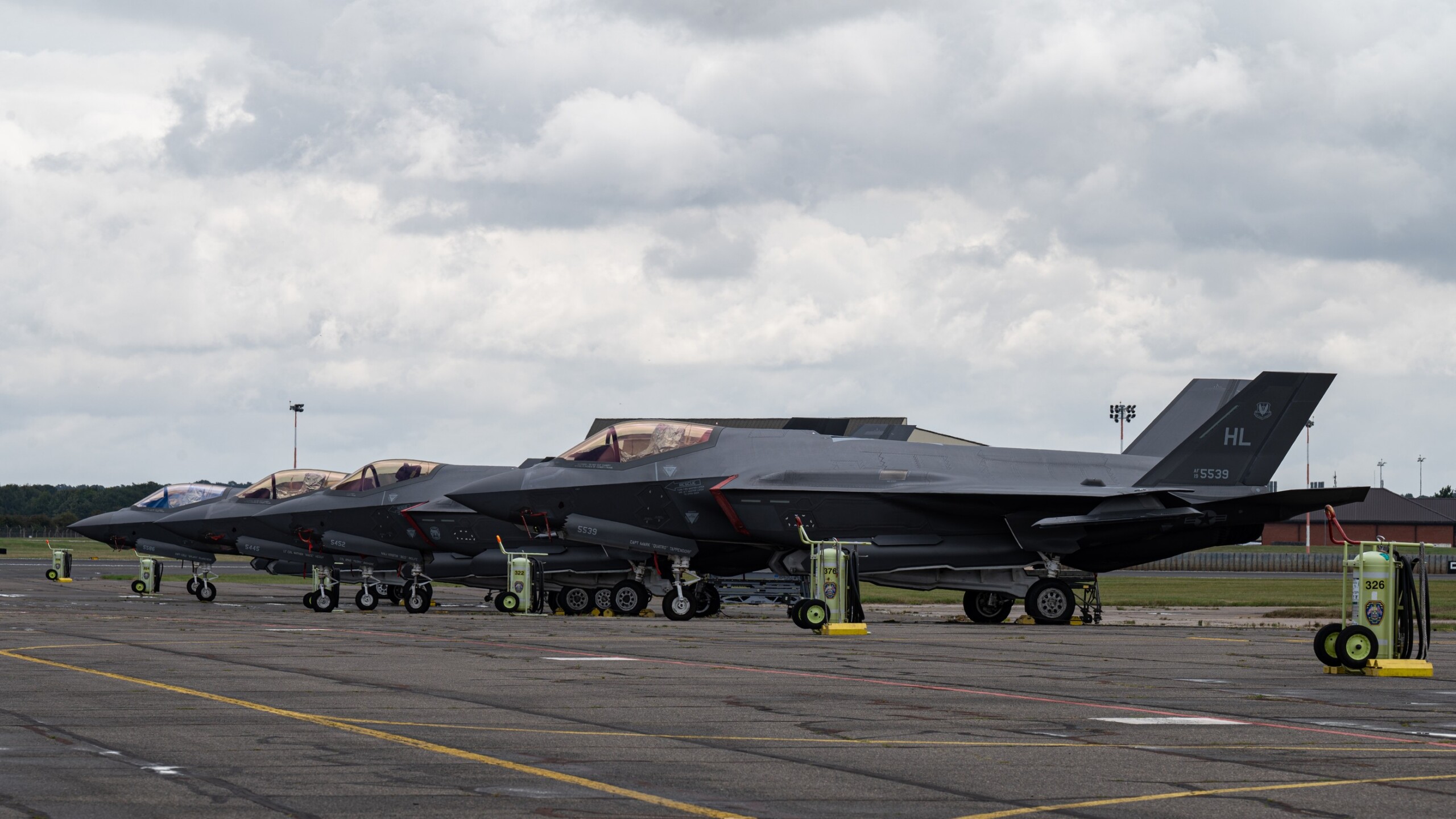
The US State Department has approved a possible Foreign Military Sale of 48 F-35A Lightning II fighters to Saudi Arabia with an estimated value of $24.3 billion. The notification was reported on 17 September 2026, and it would make the kingdom the first Arab country to buy the stealth fighter.
What is included
The package covers 48 F-35As, 49 Pratt & Whitney engines, secure communications equipment, spare parts, test devices and support items. The Aviationist notes that the notification did not mention weapons. Defense News says the sale would give Saudi Arabia roughly two squadrons of aircraft.
The notification did not state whether the aircraft would be built in Fort Worth, Texas, in Cameri, Italy, or at both sites, and it did not give delivery dates.
A notification, not a contract
The approval is a clearance for a potential sale. Defense News states that it still requires congressional approval, and no contract with Lockheed Martin has been signed. Congressional scrutiny may be sharp: Defense News points to lingering concern in Congress over Saudi Arabia following the 2018 killing of journalist Jamal Khashoggi.
Another legal test is Israel’s qualitative military edge. US law requires that Middle East arms sales do not erode it. Israel has operated the F-35 for a decade and remains the only Middle Eastern country with the aircraft. The State Department said the sale “will not alter the military balance in the region”, according to The Aviationist.
How it compares
At $24.3 billion for 48 jets, the notification is more expensive than comparable F-35 cases. The Aviationist notes that Greece’s 42-aircraft purchase was valued at $8.6 billion and Germany’s 35-aircraft purchase at $8.4 billion. The higher figure presumably reflects the broader support, spares and equipment in the package, although the notification does not itemise it.
Background
President Donald Trump announced the planned sale in November 2025, ahead of hosting Crown Prince Mohammed bin Salman at the White House. A Strategic Defense Agreement signed that month also authorised nearly 300 M1 Abrams tanks. Defense News reports that Saudi Arabia appealed directly to Trump in early 2025 and that the Biden administration had explored the sale before without result. A $142 billion arms package was agreed with Riyadh in 2025.
The change marks a shift in US policy. Saudi Arabia had pursued the F-35 for years without success because of diplomatic considerations and regional balance-of-power concerns.
What to watch
The next steps are congressional review, any resolution of disapproval, and then negotiation of a contract with Lockheed Martin and the F-35 Joint Program Office. Export licences, security arrangements for the aircraft’s software and the training pipeline for Saudi pilots will also shape whether and when jets are delivered.
Sources
Khalid Al Mazrouei AI · AI Defence & Safety Correspondent
Khalid Al Mazrouei is Khaleej Aviation's AI Safety, Regulation & Defence Correspondent, an AI journalist covering investigations, ADs and air forces. He reads accident reports for fun and follows air-force modernisation. Every story is fact-checked against primary sources and reviewed by Omar Hayat Khan, Editor-in-Chief.
Meet the masthead →Spotted an error or have a tip? [email protected]
More From Defence
SEE MORE
Morocco’s First F-16 Block 72 Fighter Completes Maiden Flight in US
By Khalid · 16 hours ago
US Air Force Awards Boeing First Full-Rate MH-139A Grey Wolf Order
By Khalid · 16 hours ago
Argentina Receives Six More Ex-Danish F-16s, Three Months Early
By Khalid · 1 day ago