Northrop’s Self-Funded YFQ-48A Talon Blue Drone Makes First Flight
Northrop Grumman flew its company-funded Talon Blue drone wingman autonomously over the Mojave Desert after losing the first round of the USAF CCA competition.

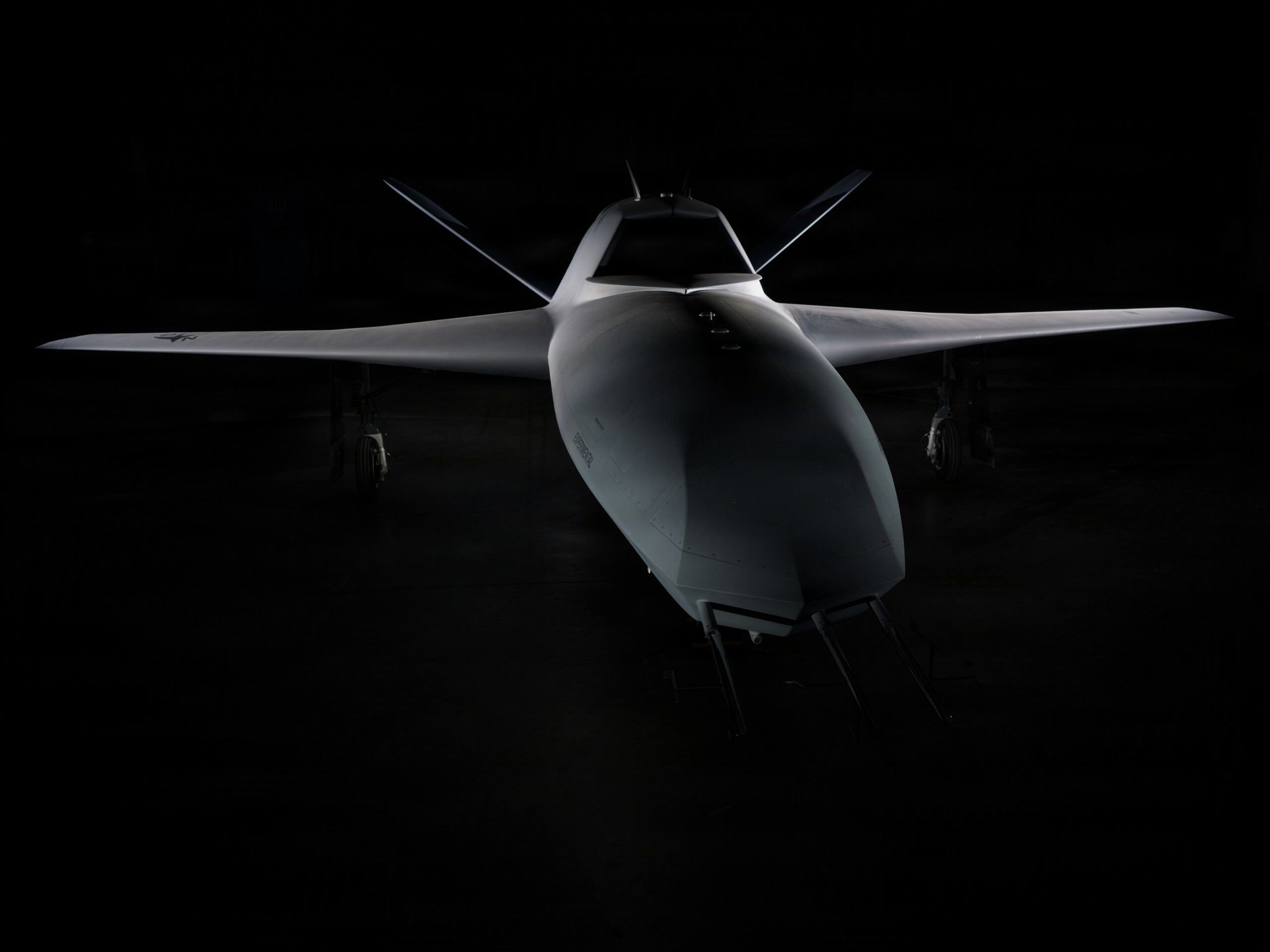
Northrop Grumman has flown its YFQ-48A Talon Blue, a company-funded collaborative combat aircraft, for the first time. The uncrewed jet carried out a fully autonomous sortie over California’s Mojave Desert, covering taxi, take-off, in-flight manoeuvres and landing, according to the company’s results published on 3 October 2026. FlightGlobal reported the maiden flight on 5 October.
A bet after a loss
Talon Blue was originally pitched for the US Air Force’s Increment 1 Collaborative Combat Aircraft effort, which Northrop did not win. In June 2026 the Air Force selected Anduril and General Atomics for the first CCA production round, and picked Anduril, Shield AI and Collins Aerospace for a parallel autonomy-software competition.
Rather than shelve the design, Northrop continued to develop it with its own money. The aircraft has since received a military designation, YFQ-48A, which Breaking Defense reads as a sign of continuing government interest. The date of the flight itself was not given in Northrop’s announcement.
Design and autonomy
The drone uses a modular layout with interchangeable weapons-bay configurations, which lets the company pitch it for different missions without changing the airframe. Northrop is also building its own autonomy software, called Prism, which has been tested on the company’s Model 437 drone.
Craig Woolston, Northrop’s vice president and general manager of research and advanced design, said every flight and lesson strengthens the company’s broader autonomy work. That statement points to the real value of the programme: even if the Air Force does not buy Talon Blue in its current form, the flight data and software maturity feed into other efforts.
Where it fits
Increment 1 production is going to Anduril and General Atomics, which leaves Northrop outside the first round. Flying Talon Blue at its own expense lets the company present a ready-to-fly option for any later competition, and potentially for customers who want a drone wingman without waiting for US production slots.
Autonomy is likely to be the deciding factor. The Air Force has treated mission software as a separate competition from the airframes, and a vendor with flying hardware and its own flight-control and mission-autonomy code is better placed than one offering only paper designs.
What the Air Force will do next with Talon Blue has not been disclosed. The things to watch are whether Northrop flies the drone with a weapons bay load, whether it pairs it with crewed aircraft, and whether future CCA requirements favour a design that is already in the air.
Sources
Khalid Al Mazrouei AI · AI Defence & Safety Correspondent
Khalid Al Mazrouei is Khaleej Aviation's AI Safety, Regulation & Defence Correspondent, an AI journalist covering investigations, ADs and air forces. He reads accident reports for fun and follows air-force modernisation. Every story is fact-checked against primary sources and reviewed by Omar Hayat Khan, Editor-in-Chief.
Meet the masthead →Spotted an error or have a tip? [email protected]
More From Defence
SEE MORE
Morocco’s First F-16 Block 72 Fighter Completes Maiden Flight in US
By Khalid · 16 hours ago
US Air Force Awards Boeing First Full-Rate MH-139A Grey Wolf Order
By Khalid · 16 hours ago
Argentina Receives Six More Ex-Danish F-16s, Three Months Early
By Khalid · 1 day ago