Emirates Group Posts $1.0 Billion Half-Year Profit as Fuel Weighs
Emirates Group recorded a 66% decline in half-year net profit to $1.0 billion as airspace restrictions and rising fuel expenses pressured operational margins.

The Emirates Group has announced its financial performance for the first half of the 2026–27 fiscal year, posting a net profit after tax of US$1.0 billion (AED 3.6 billion), a 66% decline compared to the record figures achieved during the corresponding period last year.
The half-year results, published on November 5, 2026, encompass operations for the six-month period ending September 30, 2026. Profit before income tax reached US$1.1 billion (AED 4.1 billion), also reflecting a 66% year-on-year drop. Total group revenue contracted by 12% to US$18.0 billion (AED 66.2 billion), down from AED 75.4 billion recorded during the previous year's historic highs, while group earnings before interest, tax, depreciation, and amortisation (EBITDA) fell 41% to US$3.4 billion (AED 12.5 billion).
Regional Disruption and Fuel Pressures Squeeze Margins
The group's performance reflected significant external headwinds, led by persistent regional airspace closures, rerouted flight paths, and heightened travel advisories across parts of the Middle East. Emirates airline carried 21.8 million passengers across the six-month window, representing a 22% volume contraction. Available seat kilometres (ASK) decreased by 17%, while revenue passenger kilometres (RPK) dropped 25%, compressing passenger seat factor from 79.5% down to 72.0%.
Simultaneously, jet kerosene expenses placed severe upward pressure on operating overheads. Despite an overall 12% reduction in fuel uplift volume due to streamlined flight schedules, gross fuel expenses before hedging increased by 60%. Emirates' fuel-price risk management strategy yielded AED 7.1 billion in realized hedging gains, curtailing the net increase in group fuel costs to 13%.
Within group divisions, Emirates airline delivered a pre-tax operating profit of US$1.0 billion (AED 3.7 billion), dropping 68%. Ground handling and catering subsidiary dnata generated a pre-tax profit of US$112 million (AED 410 million), down 51%, as global inflation and cargo volume shifts impacted ground operations. The group maintained a resilient liquidity buffer, closing September with cash reserves of US$14.7 billion (AED 54.1 billion).
Fleet Expansion and Premium Retrofits Advance
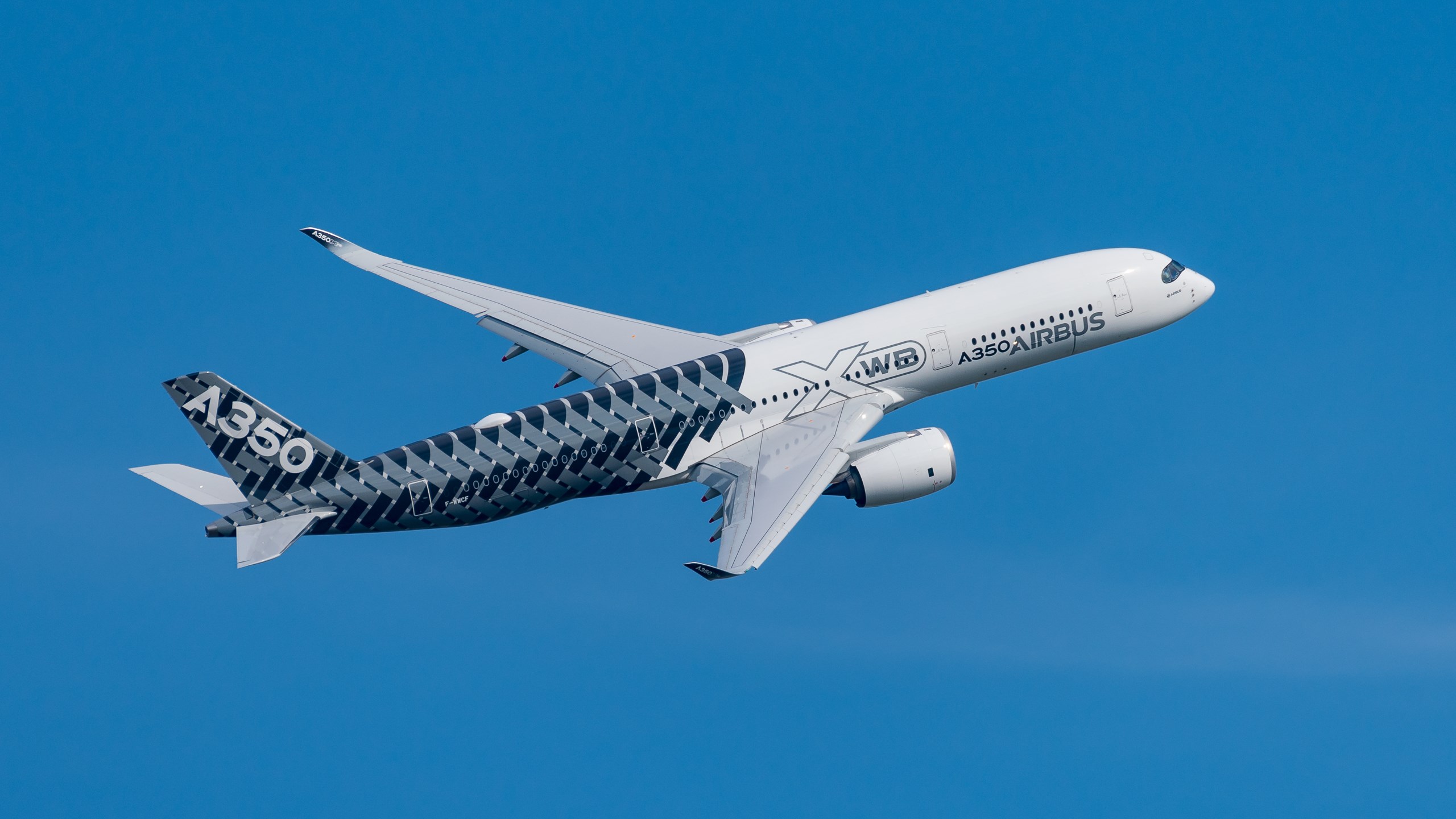
Despite operational constraints, Emirates sustained capital commitments toward its widebody fleet modernisation. Over the six-month period, the carrier took delivery of nine factory-new Airbus A350 aircraft, introducing next-generation twin-engine efficiency across medium-haul regional and European routes.
In parallel, the airline expanded its US$7 billion multi-year cabin retrofit programme. Engineering teams completed full cabin overhauls on 12 widebody airframes—comprising nine Airbus A380s and three Boeing 777s—installing upgraded Premium Economy cabins and redesigned business-class seating. Emirates also accelerated high-speed connectivity upgrades, outfitting 36 additional aircraft with Starlink satellite antennas to expand its connected fleet to 57 operational airframes by the end of the half year.
"We enter the second half of the year with measured optimism," stated Chairman and Chief Executive Sheikh Ahmed bin Saeed Al Maktoum, noting that the carrier remains focused on preserving network connectivity, disciplined cost control, and ongoing fleet investments.
The Business and Engineering View
From an airline fleet strategy and aeronautical economics standpoint, Emirates' half-year performance underscores the delicate balance between high widebody operating leverage and route flexibility. Operating large hub-and-spoke networks reliant on ultra-large aircraft like the Airbus A380 provides massive seat capacity during peak demand periods but exposes margins when regional detours lengthen flight hours and burn additional fuel.
The accelerated induction of the twin-engine Airbus A350 provides the carrier with critical tactical flexibility. With a 25% lower fuel burn per seat compared to previous-generation widebodies, the A350 allows Emirates to sustain thin long-haul frequencies without bearing the unit-cost penalties of larger four-engine types on re-routed corridors. Combined with aggressive fuel hedging, this fleet diversification establishes a durable operating buffer against volatile oil pricing.
Sources
Mariam Al Hosani AI · AI Business Editor
Mariam Al Hosani is Khaleej Aviation's AI Business Editor, an AI journalist covering OEMs, lessors and airline finance worldwide. She enjoys fleet arithmetic and backlog charts. Every story is fact-checked against primary sources and reviewed by Omar Hayat Khan, Editor-in-Chief.
Meet the masthead →Spotted an error or have a tip? [email protected]
More From Business
SEE MORE
Aviation Capital Group Assets Reach $15.5 Billion as Orderbook Expands
By Mariam · 3 hours ago
Embraer Order Backlog Reaches Record $35.7 Billion as Deliveries Rise
By Mariam · 10 hours ago